
What Happens After You Go Under Contract in Miami Real Estate
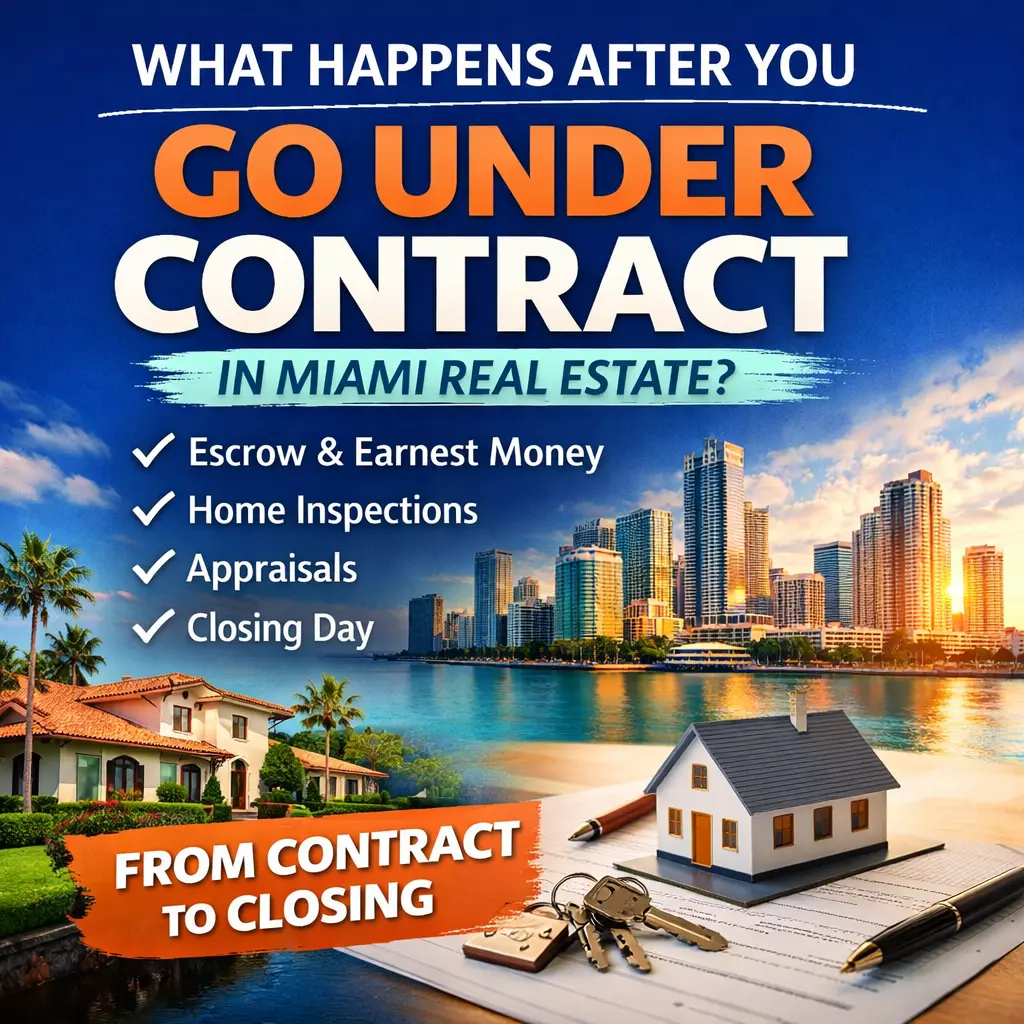
What Happens After You Go Under Contract in Miami Real Estate
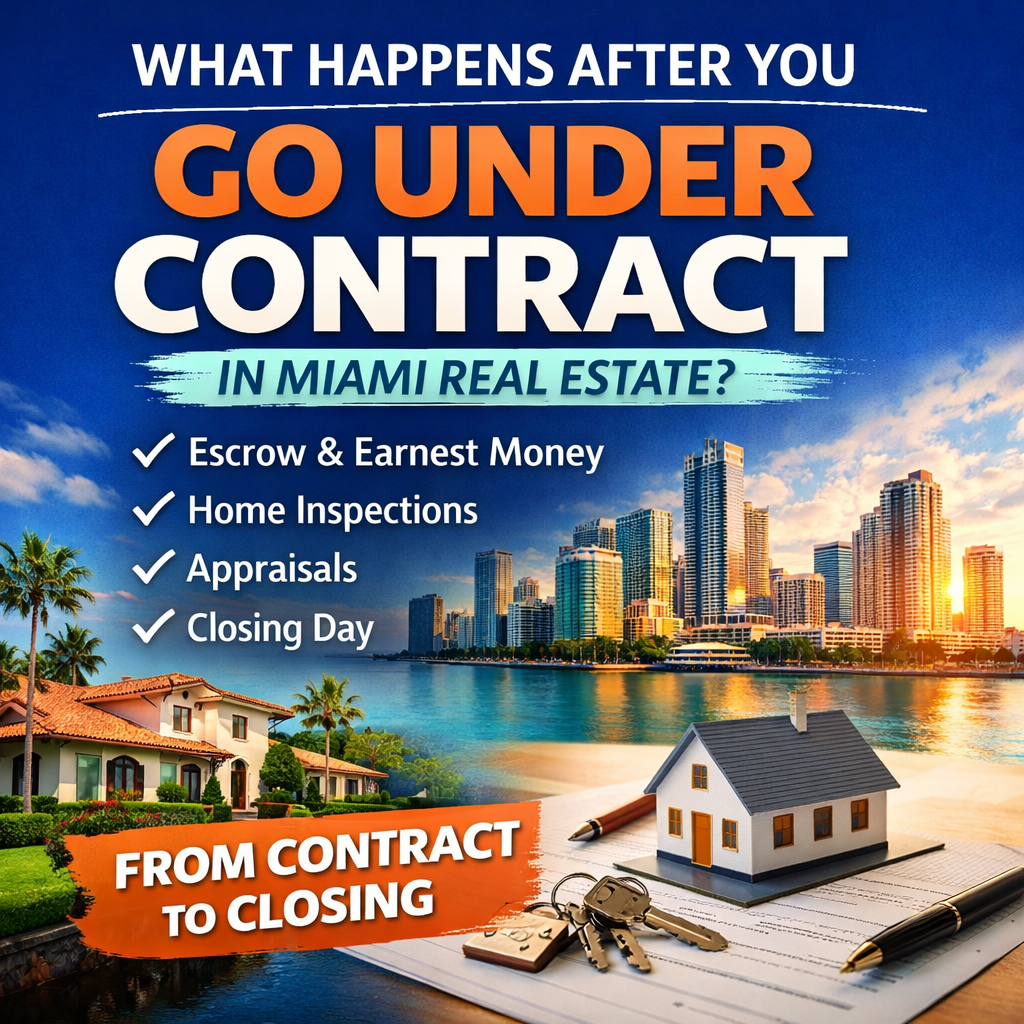
Discover what happens after going under contract in Miami real estate. Learn about escrow, inspections, appraisals, and closing steps to confidently navigate the home buying or selling process in Miami-Dade County.
Going under contract is a MAJOR milestone in buying or selling a home in Miami, Miami‑Dade County, or anywhere in South Florida — but it’s not the end of the process. In fact, this phase marks the beginning of a series of key steps that lead you from an accepted offer to closing day.
Whether you’re a first‑time home buyer in Miami Shores, a seller in Coral Gables, or an investor in Wynwood, understanding exactly what happens next can reduce stress, prevent delays, and give you an edge in the competitive Miami real estate market.
1. Escrow & Earnest Money Deposit
Once your offer is accepted and you’re officially under contract, the first step is escrow. Escrow is a neutral third‑party account where your earnest money deposit is held.
This deposit — typically 1‑3% of the purchase price — shows the seller you’re serious about buying and protects both parties while the contract details are satisfied.
2. Understand Contingencies and Deadlines
A real estate contract includes contingencies — conditions that must be fulfilled before closing. Common ones include:
-
Inspection contingency
-
Appraisal contingency
-
Financing contingency
All contingency deadlines are clearly listed in your contract, so knowing each one and working with your realtor to stay on schedule is critical.
Miami real estate contracts often have specific timelines for each contingency to protect buyers and sellers.
3. Schedule the Home Inspection
Right after going under contract, schedule a home inspection ASAP. A professional inspector reviews the condition of the property — including roofing, plumbing, HVAC, electrical systems, and structural components — to uncover any issues that may affect value or safety.
If problems are found, you can:
-
Request repairs
-
Ask for credits
-
Renegotiate price
-
Walk away if allowed by your contingency
Your Miami real estate agent is key in guiding these negotiations.
4. Loan Processing & Appraisal
While inspection is underway, your lender will finalize your mortgage application and order an appraisal to verify the home’s market value.
In the Miami‑Dade County housing market, property values can shift rapidly, so an accurate appraisal protects both you and your lender.
If the appraisal comes in lower than the contract price, you can:
-
Renegotiate with the seller
-
Pay the difference if your loan allows
-
Cancel the contract based on appraisal contingency
5. Title Search & Title Insurance
The title company conducts a title search to ensure the property’s ownership is clean — free of liens, claims, or legal issues.
If problems arise, title insurance protects you and your lender and helps ensure a smooth transfer of ownership.
6. Homeowners Insurance and Utilities
Before closing, buyers typically secure homeowners insurance — required by most lenders — and arrange utilities to be transferred or activated in their name.
Getting this done ahead of time ensures a seamless transition after you take possession.
7. Final Walk‑Through
A final walk‑through usually happens within 24‑48 hours of closing. This is your last chance to confirm the property’s condition and verify that agreed‑upon repairs were completed.
8. Closing Day
Finally — the big day! At closing, all parties sign paperwork, funds are distributed, title changes hands, and you receive your keys!
In Miami real estate, closing typically takes place 30‑60 days after going under contract, depending on lender timelines and contingency clearances.
Conclusion: From Contract to Keys
Going under contract is an exciting step in your Miami home buying or selling journey, but it’s only the beginning of several time‑sensitive tasks required to successfully close the deal.
By knowing what to expect — from escrow and inspections to appraisals, title work, and closing — you empower yourself to move forward with confidence through one of the most important financial transactions of your life.
Key Miami Real Estate Keywords You’ll Hear in This Phase
-
Under contract in Miami real estate
-
Escrow and earnest money deposit
-
Home inspections and contingencies
-
Mortgage appraisal in Miami‑Dade County
-
Title search and title insurance
Ready to buy or sell in Miami or nearby South Florida areas like Coral Gables, Brickell, or Coconut Grove? A local expert can guide you through every step from under contract to closing day — let’s get you there! Contact me HERE today.
🔊 Frequently Asked Questions (FAQs)
What does it mean to be under contract in Miami real estate?
Being under contract means a seller has accepted a buyer's offer, and both parties have signed a legally binding agreement. The property is now in escrow while contingencies like inspections, appraisal, and financing are completed.
What happens right after going under contract?
Immediately after going under contract, the buyer typically submits an earnest money deposit, schedules a home inspection, and starts the loan approval and appraisal process.
Can a buyer back out after going under contract in Florida?
Yes, a buyer can back out if a contingency in the contract (such as financing, inspection, or appraisal) isn't met within the agreed timeframe. Always review your contract and consult your Miami real estate agent or attorney.
How long does it take to close on a house in Miami after going under contract?
Closing usually takes 30 to 45 days in the Miami real estate market, depending on financing, title processing, and how quickly contingencies are resolved.
Do I need a final walk-through before closing in Florida?
Yes. A final walk-through lets buyers ensure the home is in the agreed-upon condition and that any requested repairs are complete before the closing date.
What is escrow and how does it work in Miami real estate deals?
Escrow is a neutral third-party account where the earnest money is held until closing. It protects both buyer and seller while all contract conditions are being fulfilled.
What if the appraisal comes in lower than the purchase price?
If the appraisal is lower, you may renegotiate the price, pay the difference, or cancel the contract if your appraisal contingency allows.
Categories
Recent Posts









GET MORE INFORMATION
