
How to Become a Florida Resident Step‑by‑Step Guide for 2026
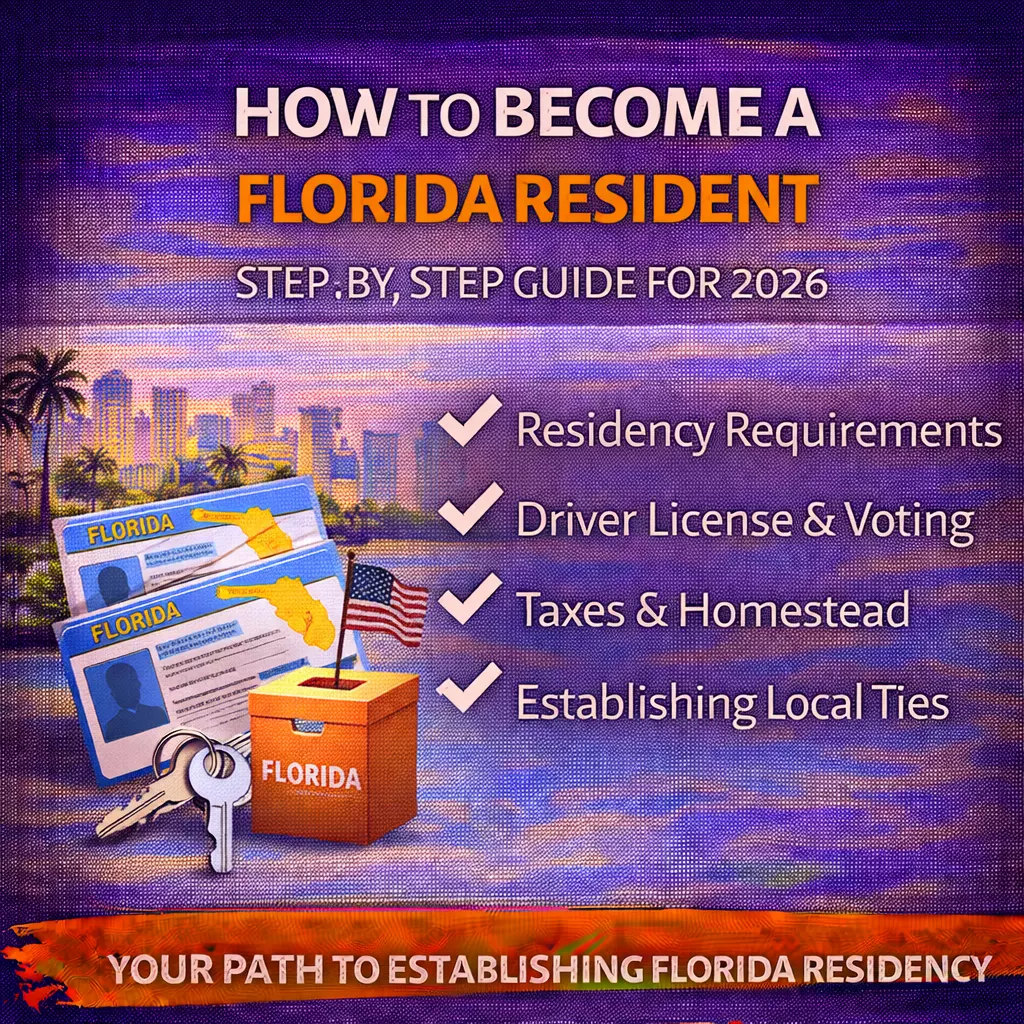
How to Become a Florida Resident
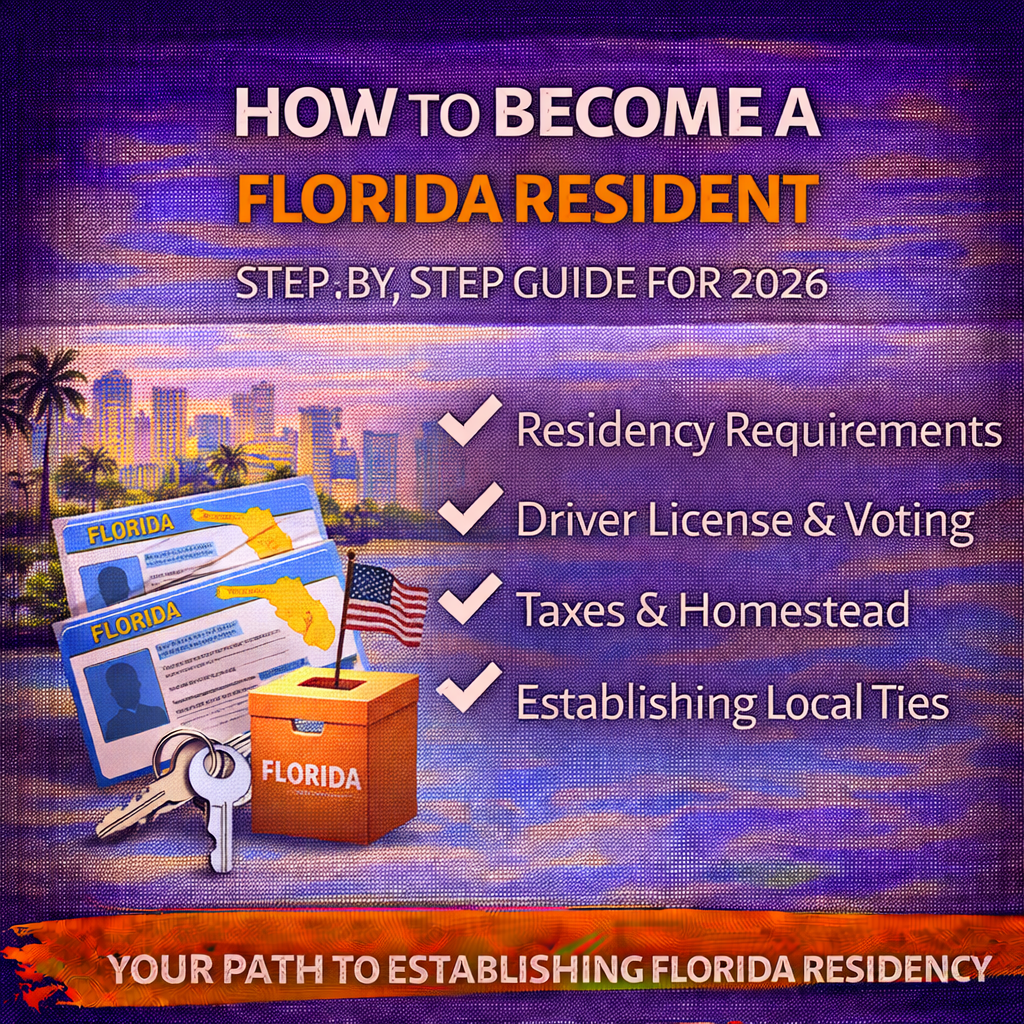
Learn how to become a Florida resident with a step‑by‑step 2026 guide. Understand residency requirements, documentation, driver license updates, voter registration, taxes, and more.
Introduction: Why Establish Florida Residency?
Becoming a Florida resident offers numerous benefits: no state income tax, access to in‑state tuition, voting privileges, and eligibility for certain licenses and exemptions. If you’re planning to make Florida your permanent home in 2026, it’s important to understand the legal steps and documentation required to establish residency.
This guide walks you through how to become a Florida resident — from physical presence and documentation to DMV requirements and tax implications.
1. Physical Presence: The First Step
To become a Florida resident, you must demonstrate actual residence in the state. This means:
-
Moving into a Florida home
-
Spending significant time in the state
-
Establishing primary living arrangements
Physical presence is the foundation of residency.
2. Establish a Physical Address
Getting a physical Florida address is key. You can use:
-
Purchasing a home
-
Signing a long‑term lease
-
Living with family with documented occupancy
A Florida address is essential for official documents and residency claims.
3. Update Your Driver License or ID
Visit your local Florida Department of Motor Vehicles to:
-
Convert your out‑of‑state license to a Florida license
-
Provide proof of identity and residency
-
Submit required documentation (proof of address, Social Security number)
This step is both proof of residency and a legal requirement.
4. Register Your Vehicle in Florida
If you own a vehicle, you’ll need to:
-
Register it with Florida tags
-
Get Florida license plates
-
Provide proof of insurance
Your vehicle registration reinforces your residency claim.
5. Register to Vote
Becoming a Florida voter is an official acknowledgment of residency. To do so, you must:
-
Complete a voter registration form
-
Provide your Florida address
-
Submit to county election office
Once registered, you’ll receive ballots for local and statewide elections.
6. File for Homestead Exemption (If Applicable)
If you own a home and live in it full‑time, you may qualify for a homestead exemption — reducing your property tax burden. Requirements usually include:
-
Primary residence status
-
Florida driver's license on file
-
Proof you occupy the home
This exemption offers financial relief and strengthens your residency claim.
7. Establish Florida Ties
You can further solidify residency with:
-
Florida bank accounts
-
Professional licenses
-
Local memberships
-
Utility bills in your name
These ties help demonstrate intent to make Florida your home.
Conclusion: Establishing Florida Roots
Becoming a Florida resident in 2026 involves intentional steps: physical presence, updating legal documents, voter registration, and connecting with community ties. Whether you’re relocating for financial benefits, lifestyle, or family reasons, following these steps confidently establishes your residency — and unlocks the perks that come with being a Floridian.
Frequently Asked Questions (FAQs)
Do I have to live in Florida all year to be a resident?
You must demonstrate primary residence, though time spent is part of establishing residency.
Is a Florida driver license required?
Yes — converting your driver license supports legal residency.
Can I vote in Florida immediately?
Once you register with your Florida address, you can vote in local and state elections.
Does residency affect taxes?
Yes — Florida does not impose state income tax, but property tax exemptions may apply depending on residency status.
Can students establish Florida residency for tuition?
Yes — documenting physical presence and intent to remain are central to eligibility.
Categories
Recent Posts










GET MORE INFORMATION
