Renting vs Buying When Relocating Pros, Cons & Decision Guide
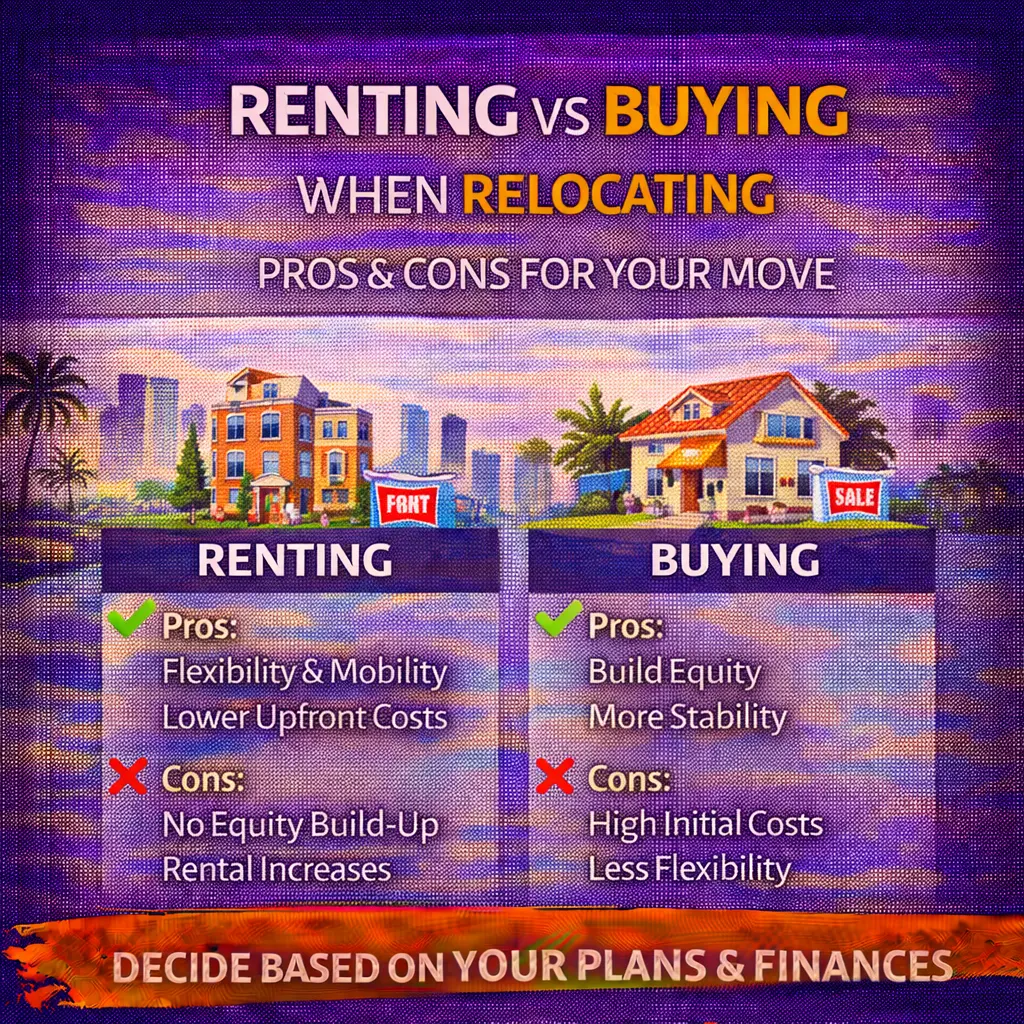
Renting vs Buying When Relocating
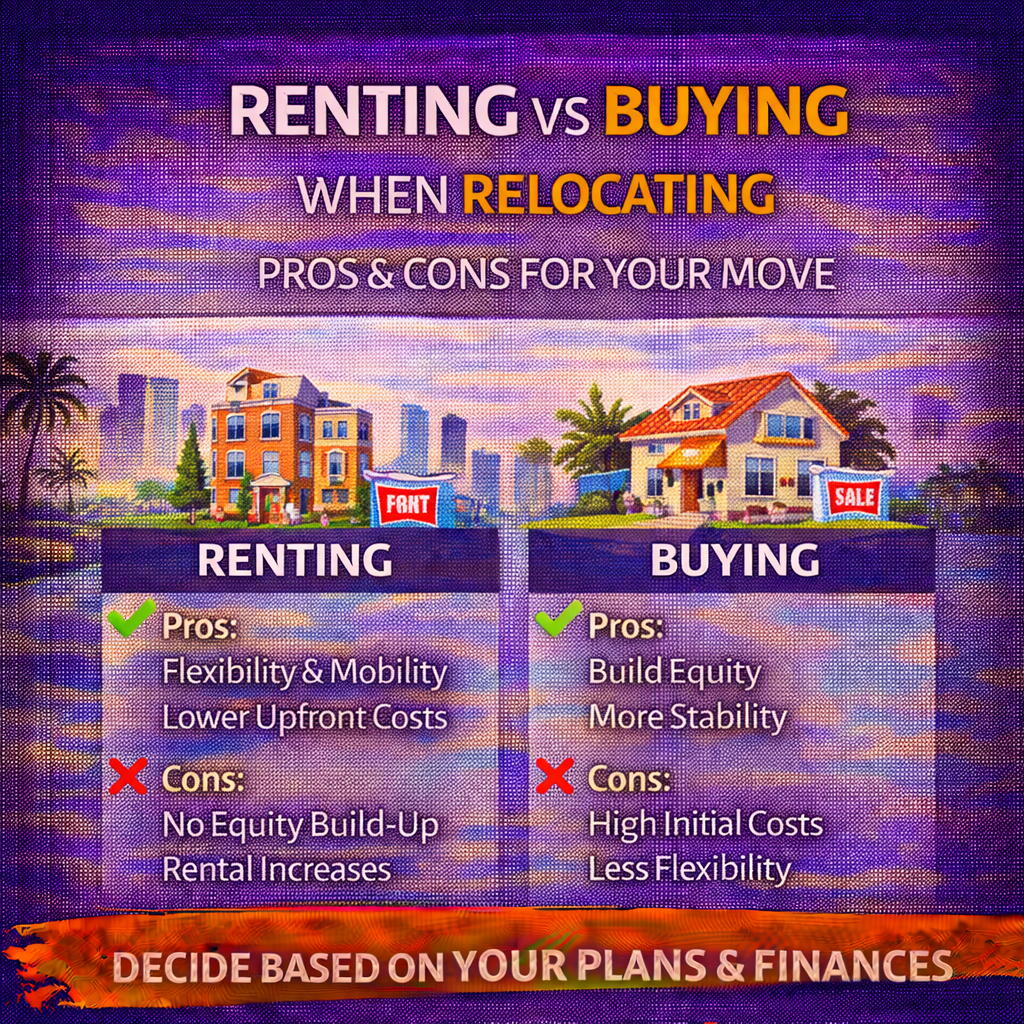
Explore the key factors in choosing between renting vs buying when relocating. Understand costs, flexibility, lifestyle fit, financial impact, and how to decide which path works best for you.
Introduction: A Big Decision When Relocating
When you relocate — whether for work, family, or lifestyle — one big question arises: Should I rent or buy? Both options have advantages and downsides, and the right choice depends on your goals, timeline, finances, and life stage.
This guide compares renting vs buying when relocating to help you make an informed decision that matches your priorities.
1. Renting: Flexibility and Simplicity
Pros of Renting
-
Lower upfront costs (security deposit, first month)
-
Mobility and flexibility — easier to move again
-
No major maintenance responsibilities
-
Ideal for short‑term stays or uncertain timelines
Cons of Renting
-
No equity build‑up
-
Subject to rent increases
-
Limited personalization (decor/renovations)
-
May lack long‑term stability
Renting makes sense if you’re testing a new area or expect life changes soon.
2. Buying: Investment and Stability
Pros of Buying
-
Equity and wealth building
-
Stability and predictability
-
Freedom to renovate and personalize
-
Potential tax and financial benefits
Cons of Buying
-
Higher upfront costs (down payment, closing costs)
-
Market risk and maintenance responsibility
-
Less flexibility to relocate quickly
-
Property taxes and insurance commitments
Buying is suited for those sure about long‑term commitment and local roots.
3. Financial Comparison: Renting vs Buying
Upfront Costs
-
Renting: deposits and move‑in fees
-
Buying: down payment, closing, inspection
Monthly Costs
-
Rent: monthly payment with possible increases
-
Buy: mortgage, taxes, insurance, maintenance
Long‑Term Value
Buying builds equity; renting offers short‑term predictability.
4. Lifestyle and Relocation Goals
Renting Works Well If:
-
You’re new to town and want flexibility
-
Job relocation may change soon
-
You want minimal maintenance
Buying Works Well If:
-
You intend to stay long‑term
-
You want investment value
-
You’re ready for homeownership responsibilities
Your lifestyle and plans are central to the decision.
5. Market Considerations in Your Destination
When relocating, research local housing trends:
-
Are home prices rising or stable?
-
Is inventory limited or abundant?
-
What are average rents vs mortgage payments?
Market conditions influence affordability and investment value.
Conclusion: Choose What Fits Your Relocation Goals
Whether you choose renting vs buying when relocating comes down to your timeline, finances, flexibility, and long‑term vision. Assess your goals carefully, explore your destination housing market, and choose the path that supports your lifestyle and financial peace of mind.
Frequently Asked Questions (FAQs)
Does renting help me decide if I want to buy later?
Yes — renting first gives time to learn the area before committing financially.
Is buying always cheaper than renting?
Not always — renting may be more affordable upfront, but buying can build long‑term equity.
Do I need a large down payment to buy?
Down payment needs vary by financing type. Some buyers put down less, but more upfront often means lower monthly payments.
Can I rent first and buy later?
Absolutely — many relocators rent first before buying once they know the area well.
Categories
Recent Posts









GET MORE INFORMATION
