
Everything to Know About Hurricanes Safety, Prep & Facts
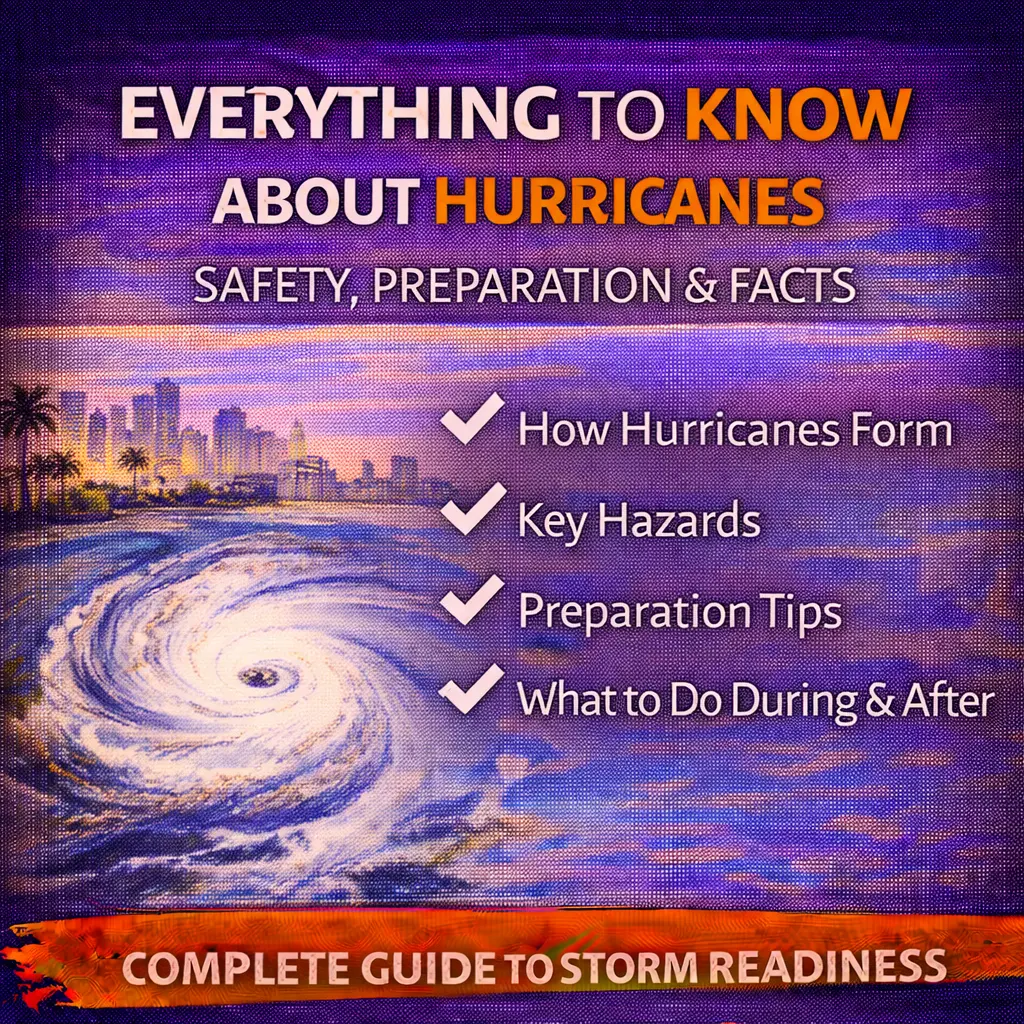
Everything to Know About Hurricanes
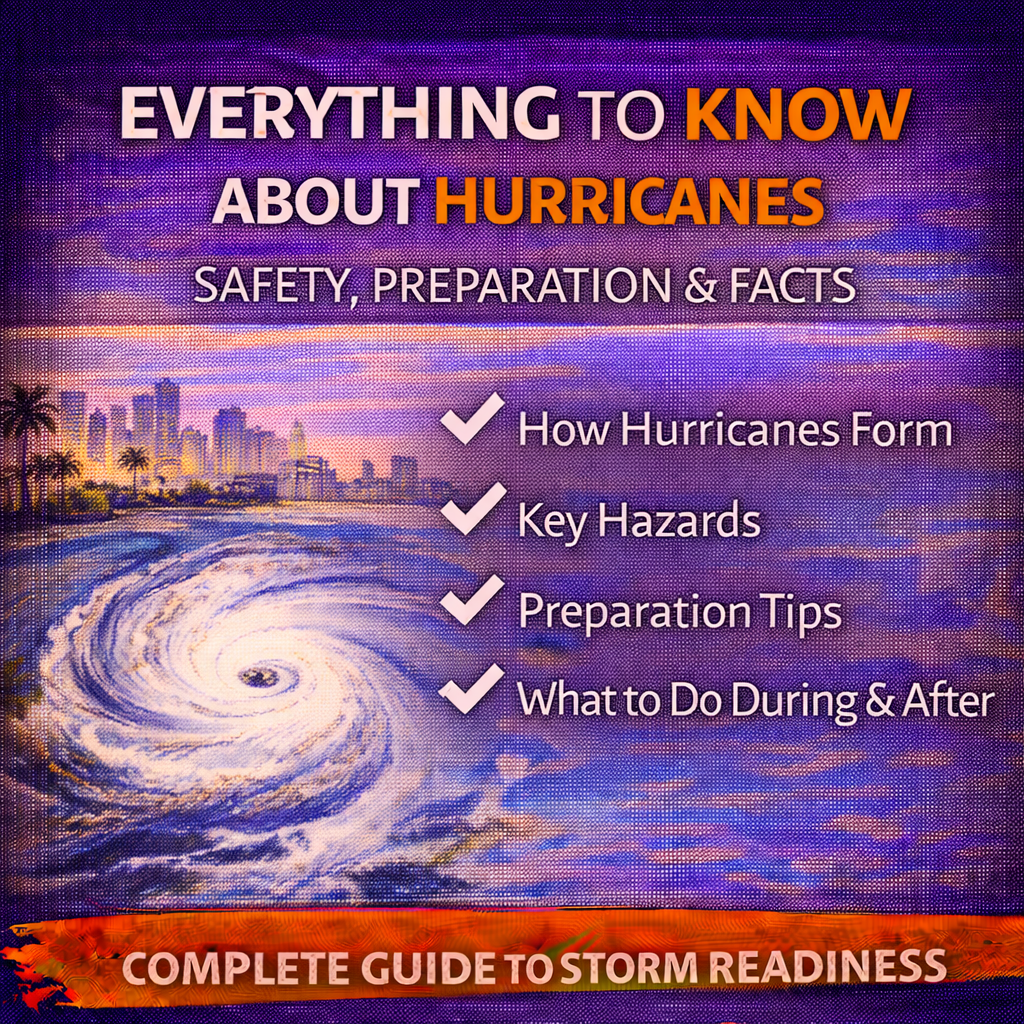
Get the complete guide on everything to know about hurricanes — including causes, how they form, preparation tips, safety strategies, and what to do before, during, and after a storm.
Introduction: Hurricanes — Nature’s Powerful Storms
Hurricanes are among the most powerful natural events on Earth. For residents in hurricane‑prone regions — especially coastal areas like Florida — understanding everything to know about hurricanes can be lifesaving. This guide explains how hurricanes form, key safety tips, preparation steps, and what to expect during and after the storm.
1. What Is a Hurricane?
A hurricane is a tropical cyclone — a large, rotating storm system that forms over warm ocean waters. It’s fueled by heat from the sea, and when conditions are right, it can develop into a major storm with:
-
Strong winds
-
Heavy rain
-
Dangerous storm surge
-
Flash flooding
Hurricanes are categorized on the Saffir‑Simpson scale based on wind speed, ranging from Category 1 (least severe) to Category 5 (most severe).
2. How Hurricanes Form
Hurricane formation generally follows this process:
-
Warm ocean water (usually above 80°F)
-
Moist air rising from the surface
-
Low wind shear aloft
-
Rotation due to Earth’s spin (Coriolis effect)
When these conditions align, storms can grow from tropical depressions to tropical storms and, ultimately, to hurricanes.
3. Hurricane Season and Timing
Hurricane season in the Atlantic typically runs from June 1 to November 30. Peak activity usually occurs in late summer and early fall, when water temperatures are warmest.
Understanding the season helps residents and travelers stay prepared and aware of evolving weather patterns.
4. Key Hurricane Hazards
High Winds
Powerful gusts can:
-
Damage roofs
-
Snap trees
-
Down power lines
Storm Surge
A surge is ocean water pushed inland by hurricane winds, causing coastal flooding — often the deadliest component.
Heavy Rain and Flooding
Rainfall can lead to inland flooding even far from the coast.
5. Preparing for a Hurricane
Build an Emergency Kit
Include essentials:
-
Water (1 gallon per person per day)
-
Non‑perishable food
-
Flashlights and extra batteries
-
Medications
-
First‑aid supplies
-
Important documents in a waterproof container
Plan Evacuation Routes
Know local evacuation zones and routes. Have a plan for where you’ll go and how you’ll get there.
Secure Your Home
-
Reinforce windows and doors
-
Bring outdoor furniture inside
-
Trim trees near structures
Preparation reduces risk and anxiety.
6. What to Do During a Hurricane
-
Stay indoors and away from windows
-
Keep a battery‑powered radio for updates
-
Follow local evacuation orders
-
Stay in an interior room on the lowest floor if not evacuating
Safety is priority #1 — don’t take unnecessary risks.
7. After the Storm: Recovery Tips
-
Wait for official “all clear” signals
-
Avoid floodwaters and downed power lines
-
Use caution with generators and gas appliances
-
Contact family and emergency services if needed
Recovery can take time — stay patient and safe.
Frequently Asked Questions (FAQs)
What’s the difference between a hurricane and a tropical storm?
A tropical storm has sustained winds of 39–73 mph; a hurricane has winds of 74 mph or more.
Is storm surge more dangerous than wind?
Often yes — storm surge can cause severe flooding and is a leading cause of fatalities.
Can hurricanes hit inland areas?
Yes — the effects of heavy rain and flooding can extend far from the coast.
How early should I prepare before hurricane season?
Start preparing before June 1; restock kits annually.
Should I evacuate for a tropical storm?
Follow local evacuation orders — sometimes yes, especially in flood‑prone areas.
Everything to Know About Hurricanes
Meta Title
Everything to Know About Hurricanes: Safety, Prep & Facts
Meta Keywords
everything to know about hurricanes, hurricane safety guide, hurricane preparation tips, hurricane season Florida, hurricane impact, storm readiness
Meta Description
Get the complete guide on everything to know about hurricanes — including causes, how they form, preparation tips, safety strategies, and what to do before, during, and after a storm.
Introduction: Hurricanes — Nature’s Powerful Storms
Hurricanes are among the most powerful natural events on Earth. For residents in hurricane‑prone regions — especially coastal areas like Florida — understanding everything to know about hurricanes can be lifesaving. This guide explains how hurricanes form, key safety tips, preparation steps, and what to expect during and after the storm.
1. What Is a Hurricane?
A hurricane is a tropical cyclone — a large, rotating storm system that forms over warm ocean waters. It’s fueled by heat from the sea, and when conditions are right, it can develop into a major storm with:
-
Strong winds
-
Heavy rain
-
Dangerous storm surge
-
Flash flooding
Hurricanes are categorized on the Saffir‑Simpson scale based on wind speed, ranging from Category 1 (least severe) to Category 5 (most severe).
2. How Hurricanes Form
Hurricane formation generally follows this process:
-
Warm ocean water (usually above 80°F)
-
Moist air rising from the surface
-
Low wind shear aloft
-
Rotation due to Earth’s spin (Coriolis effect)
When these conditions align, storms can grow from tropical depressions to tropical storms and, ultimately, to hurricanes.
3. Hurricane Season and Timing
Hurricane season in the Atlantic typically runs from June 1 to November 30. Peak activity usually occurs in late summer and early fall, when water temperatures are warmest.
Understanding the season helps residents and travelers stay prepared and aware of evolving weather patterns.
4. Key Hurricane Hazards
High Winds
Powerful gusts can:
-
Damage roofs
-
Snap trees
-
Down power lines
Storm Surge
A surge is ocean water pushed inland by hurricane winds, causing coastal flooding — often the deadliest component.
Heavy Rain and Flooding
Rainfall can lead to inland flooding even far from the coast.
5. Preparing for a Hurricane
Build an Emergency Kit
Include essentials:
-
Water (1 gallon per person per day)
-
Non‑perishable food
-
Flashlights and extra batteries
-
Medications
-
First‑aid supplies
-
Important documents in a waterproof container
Plan Evacuation Routes
Know local evacuation zones and routes. Have a plan for where you’ll go and how you’ll get there.
Secure Your Home
-
Reinforce windows and doors
-
Bring outdoor furniture inside
-
Trim trees near structures
Preparation reduces risk and anxiety.
6. What to Do During a Hurricane
-
Stay indoors and away from windows
-
Keep a battery‑powered radio for updates
-
Follow local evacuation orders
-
Stay in an interior room on the lowest floor if not evacuating
Safety is priority #1 — don’t take unnecessary risks.
7. After the Storm: Recovery Tips
-
Wait for official “all clear” signals
-
Avoid floodwaters and downed power lines
-
Use caution with generators and gas appliances
-
Contact family and emergency services if needed
Recovery can take time — stay patient and safe.
Conclusion: Be Informed, Be Prepared
Knowing everything about hurricanes empowers you to act smartly, protect your family, and stay safe. With preparation and awareness, you can minimize risk and manage hurricane season confidently — whether you live near the coast or inland.
Frequently Asked Questions (FAQs)
What’s the difference between a hurricane and a tropical storm?
A tropical storm has sustained winds of 39–73 mph; a hurricane has winds of 74 mph or more.
Is storm surge more dangerous than wind?
Often yes — storm surge can cause severe flooding and is a leading cause of fatalities.
Can hurricanes hit inland areas?
Yes — the effects of heavy rain and flooding can extend far from the coast.
How early should I prepare before hurricane season?
Start preparing before June 1; restock kits annually.
Should I evacuate for a tropical storm?
Follow local evacuation orders — sometimes yes, especially in flood‑prone areas.
Categories
Recent Posts










GET MORE INFORMATION
