
What Does “As‑Is” Really Mean in Florida? Home Sale Explained
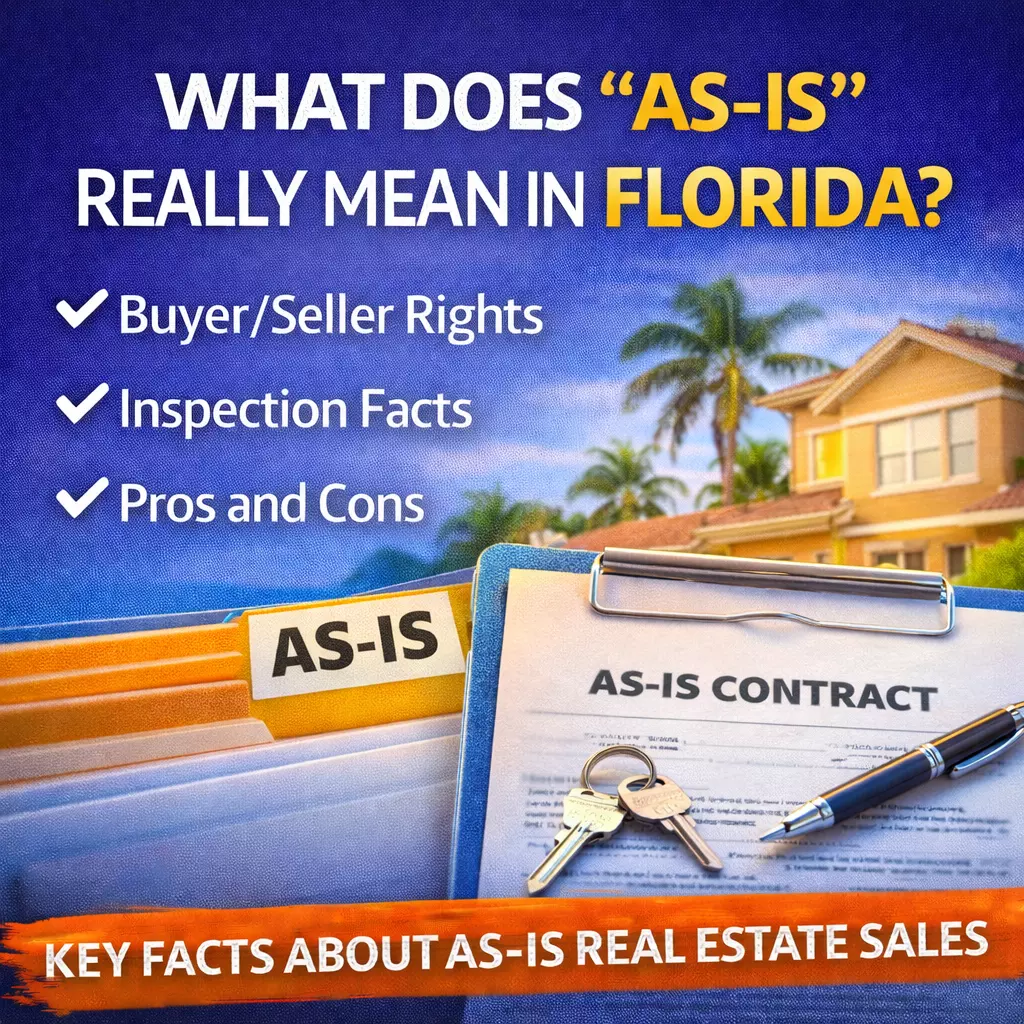
What Does “As‑Is” Really Mean in Florida?
Discover what “as‑is” really means in Florida real estate. Learn how as‑is home sales work, seller responsibilities, buyer rights, inspection implications, and tips for successful transactions.
Introduction: Understanding “As‑Is” in Florida Real Estate
When you see a property listed “as‑is” in Florida, what does that really mean? Many buyers and sellers hear this term but aren’t sure how it affects the sale process or legal responsibilities. In Florida real estate, an as‑is sale can influence inspections, disclosures, offers, negotiations, and the overall transaction.
In this blog, we’ll explain what “as‑is” really means in Florida, how it impacts both buyers and sellers, and what you should know before entering an as‑is agreement.
What “As‑Is” Means in Florida
In real estate, “as‑is” means the seller is offering the property in its current condition with no obligation to fix problems or make repairs. However, selling as‑is doesn’t mean the seller can hide defects or avoid all responsibilities. Florida law requires certain disclosures — even in as‑is sales — to protect buyers and ensure transparency.
In simple terms:
-
Seller isn’t required to make repairs
-
Property sold with all its existing defects (visible and known)
-
Buyer accepts the condition at the time of sale
-
Inspections may still be allowed but not required
Seller Responsibilities in an “As‑Is” Sale
Even when selling a home as‑is, Florida sellers must be honest about known issues. Key points include:
Full Disclosure of Known Problems
Sellers should disclose any known defects that affect the property’s value or habitability. Common issues include:
-
Roof leaks
-
Foundation cracks
-
Plumbing problems
-
Electrical hazards
-
Mold or water damage
Withholding known issues may lead to disputes or legal consequences.
Providing Accurate Property Information
An as‑is sale doesn’t excuse sellers from providing accurate, truthful information about the condition of the home. Prospective buyers rely on this information to make informed decisions.
Allowing Inspections (Optional but Common)
Although Florida law does not require inspections for as‑is sales, many buyers still request inspections to understand what they are buying. Sellers can accept or reject inspection requests, and negotiations may follow based on findings.
Buyer Considerations in an “As‑Is” Purchase
If you’re buying a property listed as‑is in Florida, here’s what you should consider:
1. Conduct a Thorough Inspection
An inspection is highly recommended, even if not required. It helps reveal issues you may not see and gives you negotiating leverage.
2. Know Your Budget for Repairs
Since you may inherit defects, estimate potential repair costs and factor them into your offer price.
3. Understand That Repairs Are Not Guaranteed
Sellers of as‑is properties are typically not obligated to fix problems — even after inspection.
4. Negotiate With Eyes Wide Open
If inspection reveals significant issues, you may be able to negotiate price adjustments or terms — but the seller is not required to comply.
How Inspections Fit Into As‑Is Sales
An as‑is sale does not eliminate inspections — it simply limits the seller’s obligation to fix issues. Inspections help buyers understand:
-
Structural integrity
-
Mechanical systems
-
Roof condition
-
HVAC performance
-
Moisture, mold, or pest concerns
Buyers who skip inspections risk costly surprises after closing. In an as‑is sale, the inspection becomes your protection and a key negotiation tool.
Pros and Cons of Buying or Selling As‑Is
Pros for Sellers
-
Less obligation to pay for repairs
-
Faster sale process
-
Attractive to investors and bargain buyers
Cons for Sellers
-
May receive lower offers
-
Buyers may be cautious without disclosures
Pros for Buyers
-
Opportunity to purchase below market value
-
Potential equity after repairs
Cons for Buyers
-
Responsible for all repairs after closing
-
Greater risk of hidden issues
Tips for a Smooth As‑Is Transaction
For Sellers
-
Be transparent about known issues
-
Provide accurate disclosures
-
Prepare realistic pricing based on condition
For Buyers
-
Invest in a comprehensive inspection
-
Factor repair costs into your offer
-
Ask questions before committing
Clear communication and documentation help both sides avoid surprises and complete the transaction successfully.
Conclusion: Knowing What “As‑Is” Really Means
Understanding what “as‑is” really means in Florida helps buyers and sellers make informed decisions. While as‑is sales offer speed and simplicity, they also require careful evaluation, clear communication, and transparency about condition.
If you’re buying an as‑is home, prioritize inspections and realistic budgeting. If you’re selling as‑is, disclose known issues and price your property fairly. With the right approach, an as‑is transaction can be a confident and successful real estate experience.
Frequently Asked Questions (FAQs)
What does “as‑is” really mean in Florida real estate?
In Florida, an as‑is sale means the seller offers the property in its current condition without obligation to make repairs, but disclosures of known issues are still required.
Can buyers still inspect an as‑is property?
Yes. Buyers can request inspections even in as‑is transactions. Inspections help buyers identify potential issues before purchase.
Does an as‑is sale guarantee there are no problems?
No. An as‑is sale simply means the seller won’t be obligated to fix problems. Buyers should expect to handle repairs after closing.
Are sellers responsible for disclosing issues in an as‑is sale?
Yes. Even in an as‑is transaction, sellers must disclose known material defects to avoid legal issues.
Can a buyer back out after an inspection in an as‑is sale?
Depending on contract terms and contingencies, a buyer may be able to back out if issues are discovered — but sellers are not required to fix them.
Is buying as‑is cheaper in Florida?
Often, as‑is properties are priced lower to reflect the condition and the buyer’s responsibility for repairs.
Should buyers always get an inspection in an as‑is purchase?
Yes. Inspections provide valuable insight into condition and repair needs, helping buyers decide if the investment is worth it.
Categories
Recent Posts










GET MORE INFORMATION
