
Pre Construction Investment Strategies for Miami Real Estate
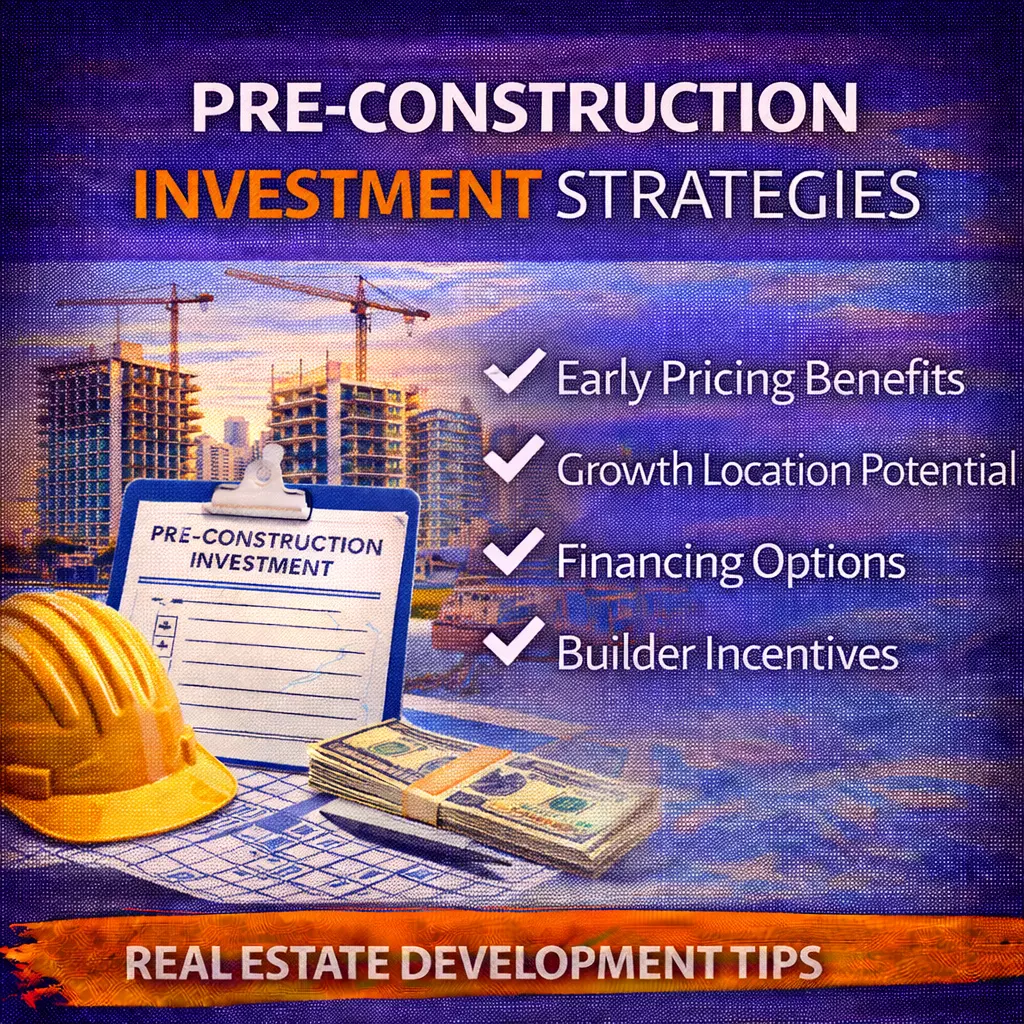
Pre‑Construction Investment Strategies
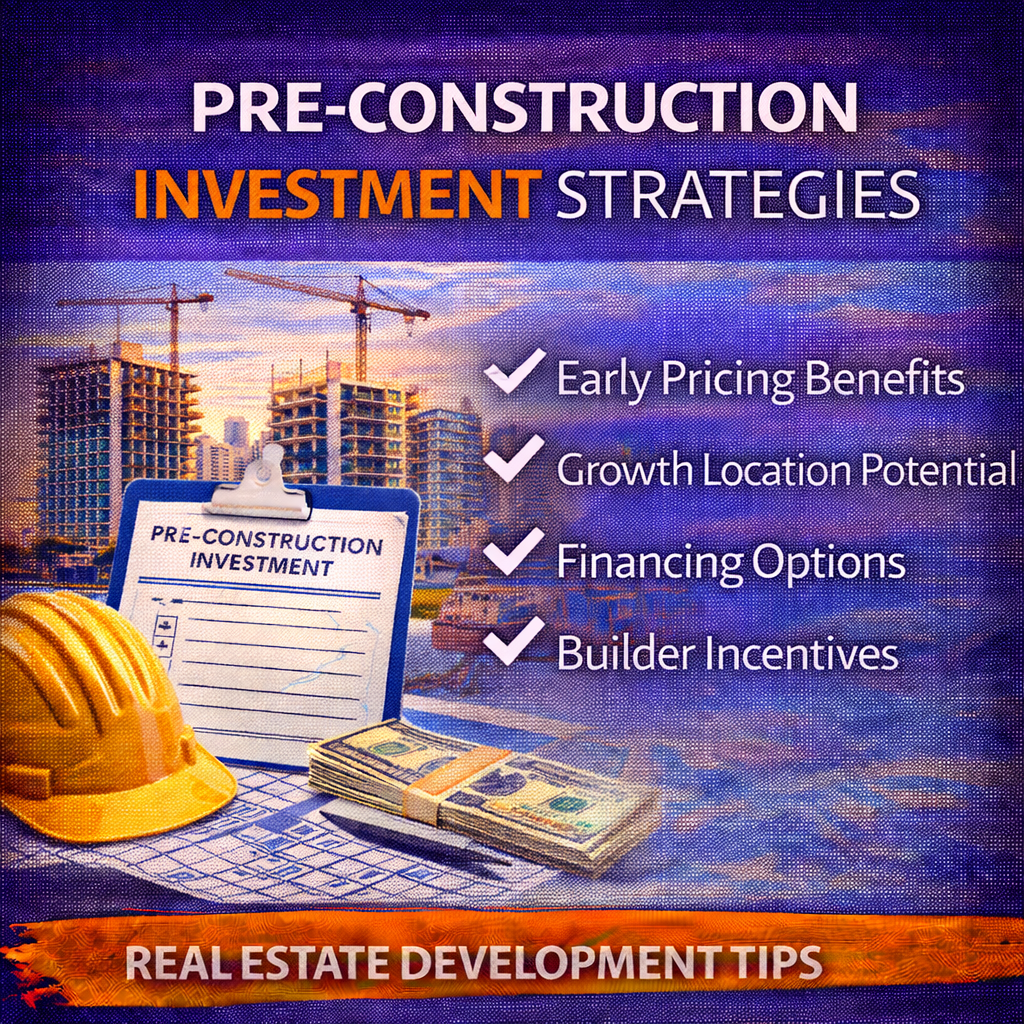
Learn pre‑construction investment strategies for Miami real estate. Discover how to evaluate, negotiate, and plan early investments to maximize returns and minimize risk in new developments.
Introduction: Why Pre‑Construction Investments Matter
Pre‑construction real estate offers investors the chance to secure property at early pricing before growth or demand pushes values higher. In Miami — where development is constant — understanding pre‑construction investment strategies helps investors minimize risk and maximize long‑term returns.
This blog explains key strategies for investing in pre‑construction properties, including how to evaluate projects, plan financing, and leverage timing to your advantage.
1. Understand the Pre‑Construction Timeline
Pre‑construction involves multiple phases:
-
Land acquisition
-
Permitting/development approvals
-
Break ground and build
-
Completion and delivery
Each phase carries potential risks and opportunities for value creation.
2. Evaluate the Developer’s Track Record
An experienced developer matters. Evaluate:
-
Quality of past projects
-
On‑time delivery
-
Reputation in the market
-
Financial stability
These factors influence execution and property value appreciation.
3. Location Is Still King
Even before construction begins, location drives long‑term value. Prioritize sites with:
-
Growth potential
-
Near transit and amenities
-
Strong rental markets
-
Future infrastructure plans
Strategic locations often outperform stagnant ones.
4. Lock in Early Pricing
One of the biggest advantages of pre‑construction is early pricing — before market appreciation. Early investors often benefit from:
-
Lower entry costs
-
Builder incentives
-
Early phase discounts
-
Select unit choice
This early advantage can significantly impact long‑term ROI.
5. Plan Your Financing Approach
Pre‑construction often requires:
-
Larger deposits early in the process
-
Staged payments
-
Interim financing
Understanding your financing options and contingency plans ensures you don’t get caught unprepared during development.
6. Anticipate Market Shifts
Pre‑construction investment is forward‑looking. Consider:
-
Forecasted price appreciation
-
Rental demand growth
-
Neighborhood trends
-
Economic outlook
Evaluating future conditions helps you decide whether a project aligns with your goals.
7. Use Builders’ Incentives Strategically
Builders may offer incentives such as:
-
Upgrades included
-
Reduced fees
-
Flexible payment terms
-
Closing cost assistance
Negotiating incentives carefully reduces your investment burden early on.
8. Understand Exit Strategies Upfront
Consider your goals:
-
Sell at completion
-
Rent for cash flow
-
Hold long‑term for appreciation
Your strategy affects unit choice, financing approach, and timing.
Conclusion: Smart Strategies for Pre‑Construction Success
Pre‑construction investment strategies offer powerful opportunities in a development‑driven market like Miami. By evaluating developers, analyzing location trends, planning financing, and leveraging early pricing advantages, you position yourself for strong returns and long‑term profitability.
With strategic foresight and careful preparation, pre‑construction investments can be a cornerstone of a robust real estate portfolio.
Frequently Asked Questions (FAQs)
What is pre‑construction real estate?
Pre‑construction refers to investing in property before construction is complete — often during planning or early build phases.
Is it risky to invest early?
Pre‑construction carries risk — but thorough evaluation and smart planning can mitigate issues.
Do pre‑construction properties appreciate faster?
Often they do, especially in growing markets, but timing and location influence outcomes.
How do incentives affect returns?
Builder incentives reduce your initial costs and improve ROI by lowering your entry price.
Can I sell before completion?
Some investors do sell before delivery — but check builder policies and contracts for restrictions.
Is financing harder for pre‑construction?
Financing may require staged payments or specialized mortgage terms — plan ahead.
Categories
Recent Posts









GET MORE INFORMATION
