
How Property Taxes Affect ROI Real Estate Investment Insight
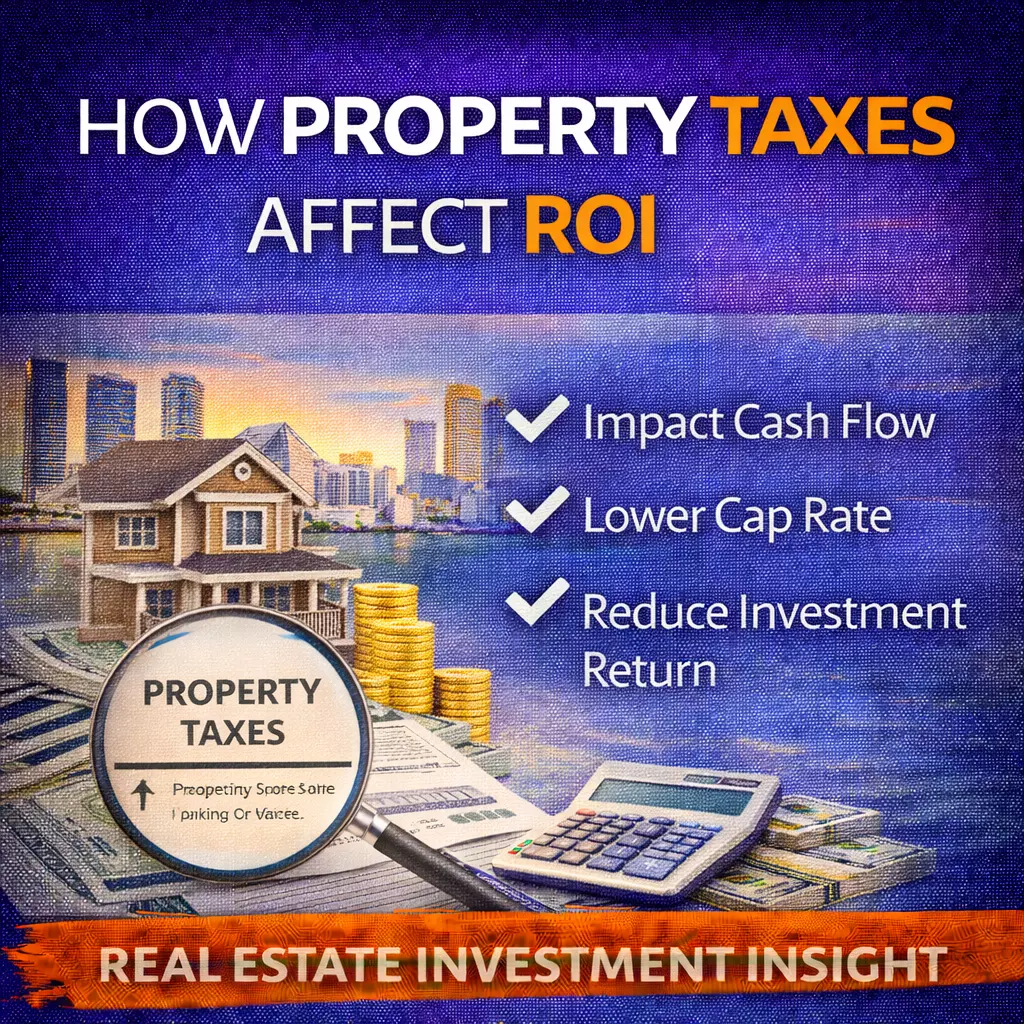
How Property Taxes Affect ROI
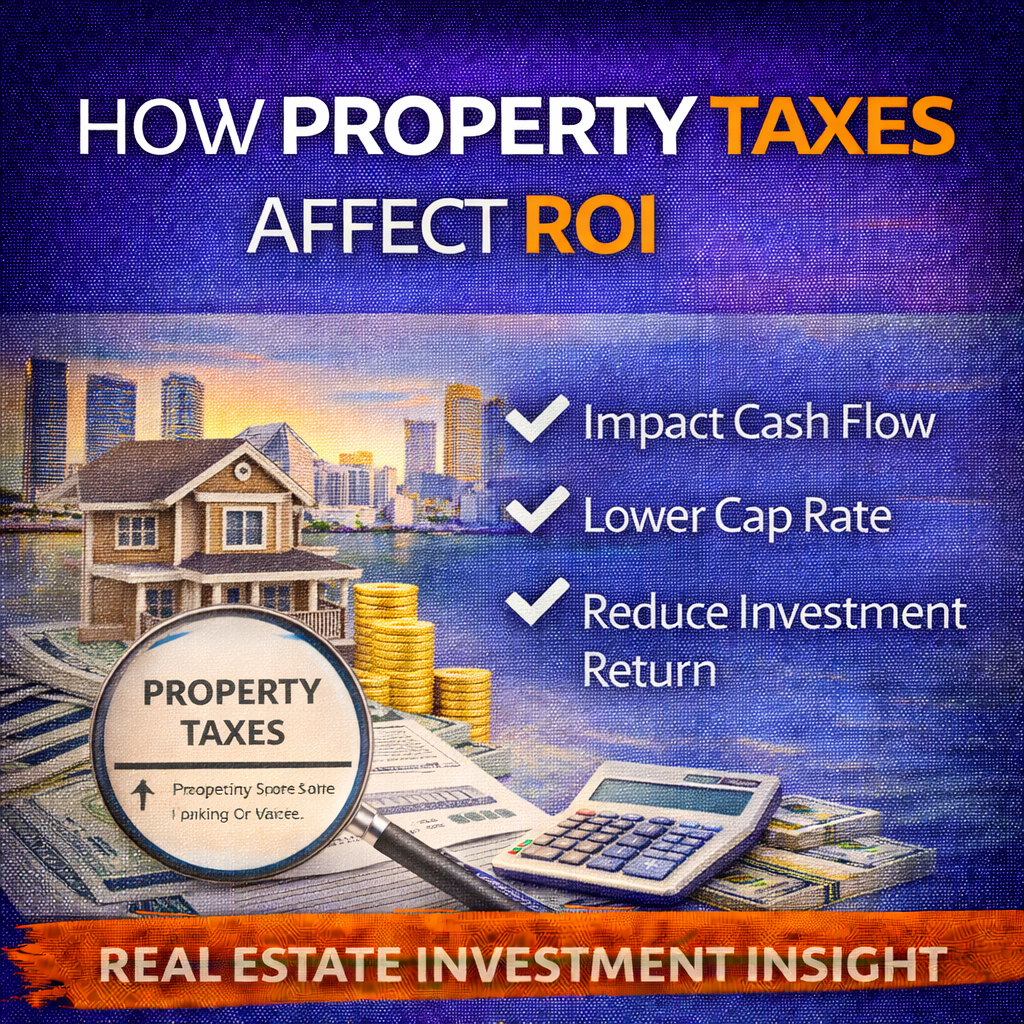
Learn how property taxes affect ROI in real estate investing. Understand how taxes influence cash flow, cap rate, and overall investment returns, with practical tips for Miami investors.
Introduction: Why Property Taxes Matter
In real estate investing, property taxes are more than a line item — they shape your return on investment (ROI). Taxes affect your ongoing expenses, cash flow, cap rate, and overall profitability. They vary by jurisdiction, property value, and assessment methods — particularly in markets like Miami where property values fluctuate.
This guide explains how property taxes affect ROI and what you should consider when evaluating an investment.
1. Property Taxes Increase Operating Expenses
Property taxes are unavoidable ownership costs. Higher taxes reduce net operating income, which directly lowers ROI. When analyzing a property:
-
Always include tax estimates
-
Factor them into your expense forecast
-
Compare tax rates across neighborhoods
2. Impact on Cash Flow and Cash‑on‑Cash Return
Because taxes decrease your NOI, they also reduce:
Cash Flow
Cash Flow = Rental Income − (Operating Expenses + Taxes)
Cash‑on‑Cash Return
Cash‑on‑Cash = Annual Pre‑Tax Cash Flow ÷ Cash Invested
Higher taxes can significantly reduce this figure especially on leverage properties.
3. Effects on Cap Rate
Cap Rate = (NOI ÷ Property Value) × 100
Since NOI includes taxes, rising taxes lower cap rates — indicating lower income relative to price. Understanding tax impact is essential in comparing deals.
4. Property Taxes and Appreciation
While taxes don’t affect market appreciation directly, higher carrying costs can dampen investor appetite — reducing competition in certain segments. Some markets with higher tax burdens may offer better long‑term rent increases or appreciation, so balance tax impact with market fundamentals.
5. Strategies to Mitigate Tax Impact
Appeal Property Assessments
If assessed value seems high, you may appeal with local tax authorities.
Choose Value‑Friendly Areas
Some areas have lower relative tax rates without sacrificing demand.
Leverage Deductions
Investment property taxes can often be part of deductible expenses for income tax purposes.
Conclusion
Property taxes are a major driver of return — often underestimated in investment analysis. Understanding how tax costs affect cash flow, cap rate, and ROI helps you choose properties that align with your financial goals and avoid surprises in your long‑term performance.
FAQ:
Do property taxes affect rental pricing?
Yes — higher taxes can influence pricing strategy and required rent to achieve target returns.
Are property taxes deductible?
Tax deductions depend on your overall tax situation — consult a tax advisor.
Can taxes change after purchase?
Yes — reassessments can raise your annual tax bill and affect ROI.
Should investors avoid high‑tax areas?
Not always — balance tax rates with demand, rental rates, and appreciation potential.
Does cap rate analysis include taxes?
Yes — because taxes are part of net operating income, they factor directly into cap rates.
Categories
Recent Posts










GET MORE INFORMATION
