
Biggest Market Myths in Miami Real Estate Truths You Should Know
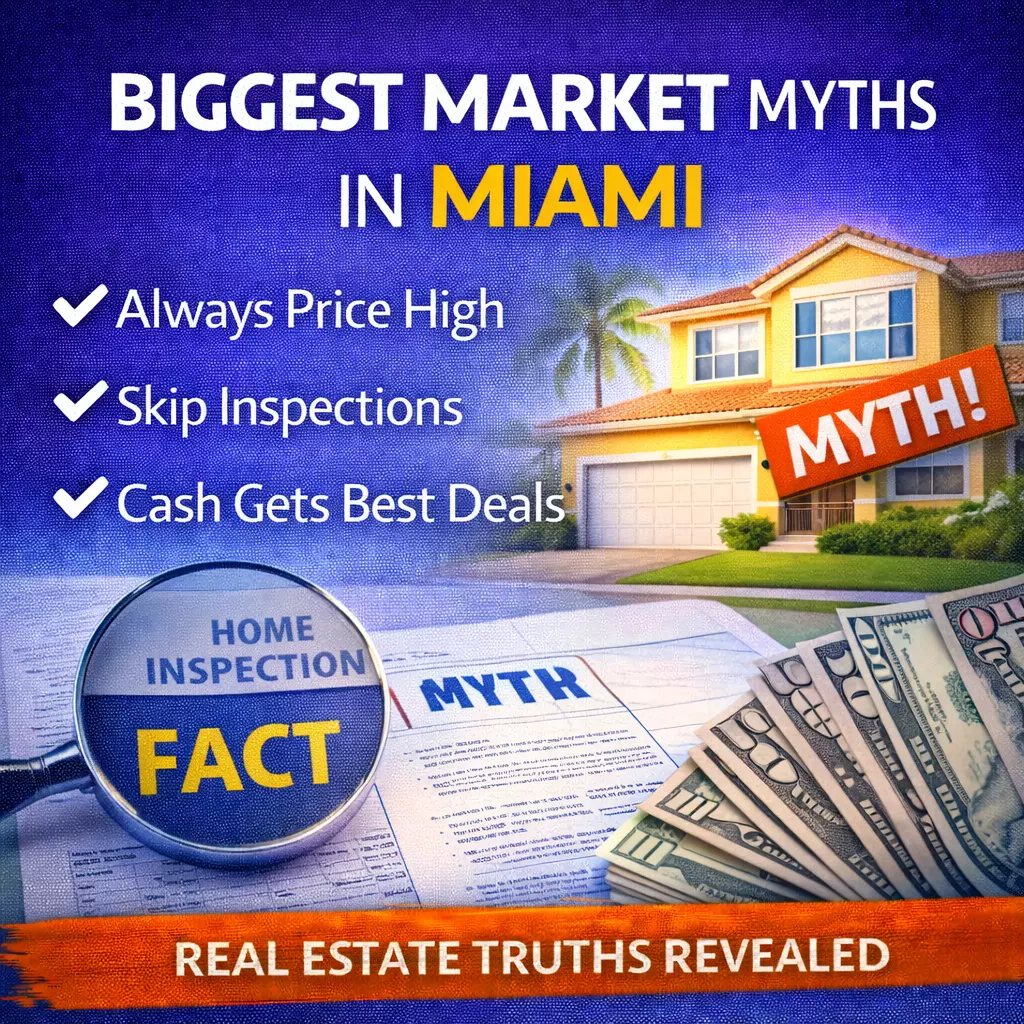
Biggest Market Myths in Miami

Discover the truth behind the biggest market myths in Miami real estate. Learn what’s fact versus fiction about pricing, inventory, timing, and buyer/seller expectations in today’s Miami market.
Introduction: Why Busting Miami Market Myths Matters
Miami real estate moves fast — and with that speed come misconceptions. Buyers and sellers often rely on rumors, outdated assumptions, or oversimplified advice that doesn’t reflect current realities. These overarching narratives can influence decision‑making, pricing expectations, and timing strategies.
In this blog, we’ll debunk the biggest market myths in Miami, replacing confusion with clarity and helping you make confident real estate decisions.
Myth 1: You Must Always Price High to Make More Money
Truth: Overpricing rarely results in higher proceeds. In fact, homes that start too high often sit on the market longer, leading to price reductions and fewer competitive offers. Strategic pricing based on real data — not aspiration — attracts more buyers and can often result in a stronger sale price.
Myth 2: Miami Homes Always Sell Fast
Truth: While some Miami neighborhoods see quick sales, not every home flies off the market. Days on market depend on price, condition, location, marketing, and economic factors. Competitive pricing and presentation drive speed — not location alone.
Myth 3: You Can Skip Inspections in Hot Markets
Truth: Skipping inspections because a market is “hot” is risky. Even in high‑demand areas, inspections protect buyers by uncovering hidden issues and protect sellers by pre‑identifying concerns. Inspections are about confidence — not just negotiation.
Myth 4: Cash Buyers Always Get the Best Deals
Truth: Cash offers can be attractive due to fewer financing hurdles, but they’re not always the “best” deals. Terms, contingencies, closing timelines, and buyer confidence all factor into offer strength. A financed offer with fewer contingencies can sometimes be stronger than a cash offer.
Myth 5: Appraisals Don’t Matter in Rising Markets
Truth: Appraisals still matter — especially if financing is involved. Even in rising markets, an appraisal can come in at or below the contract price, affecting loan terms and negotiations. Appraisal outcomes remain a critical check on value.
Myth 6: You Should Always Wait for a Better Market
Truth: Trying to time the market perfectly is nearly impossible. Waiting can cost money if prices and interest rates continue rising. Your personal goals, budget, and lifestyle priorities often matter more than broad macro trends.
Myth 7: You Don’t Need an Agent in Today’s Tech Market
Truth: Technology helps buyers and sellers find listings and resources — but it does not replace local expertise. An experienced agent interprets data, guides pricing strategies, negotiates offers, and navigates complex paperwork. Tech is a tool — not a substitute for strategy.
Myth 8: You Can Skip Staging and Still Sell Quickly
Truth: Staging matters — even in active markets. Well‑staged homes help buyers visualize living in the space and often sell faster and for higher prices than unstaged homes. Emotional connection is part of the buying decision.
Myth 9: New Construction Is Always Better Value
Truth: New construction has perks — warranties, modern design, energy efficiency — but it’s not always the best value for every buyer. Location, resale potential, community fees, and timing should all be considered alongside the allure of new builds.
Conclusion: Facts Over Fiction in Miami Real Estate
Miami real estate is dynamic, diverse, and full of opportunity — but navigating it confidently requires cutting through myths and focusing on real data and strategy. Whether you’re buying or selling, understanding the truth behind market myths helps you act with clarity rather than assumption.
From pricing strategy and inspections to staging, agent expertise, and timing decisions — separate belief from reality, and you’ll be poised to succeed in Miami’s evolving market.
Frequently Asked Questions (FAQs)
Is the Miami market always competitive?
Not necessarily. While many areas show strong demand, competition depends on inventory, price range, and neighborhood dynamics. Some segments may be more competitive than others.
Does staging really help sell homes faster?
Yes. Staged homes often attract more interest and can sell faster and for stronger prices because staging helps buyers visualize the space and lifestyle.
Are inspections optional in Miami real estate?
Inspections are not required, but they are highly recommended. They help buyers identify potential issues and give confidence in their purchase.
Do appraisals matter if you’re paying in cash?
They matter for pricing accuracy and future resale considerations, even if not required for financing. Appraisals ensure fair market value assessment.
Should everyone use a real estate agent in Miami?
While it’s possible to buy or sell without an agent, most buyers and sellers benefit from a local expert who understands pricing, negotiation, legal requirements, and market trends.
Is new construction better than resale homes?
Not always. The best choice depends on buyer preferences, budget, location priorities, and resale considerations. New homes have advantages but are not universally “better.”
Can markets change rapidly in Miami?
Yes. Miami’s market can shift based on economic trends, inventory levels, demand fluctuations, and housing policies. Staying informed helps you make the best decision at the right time.
Categories
Recent Posts









GET MORE INFORMATION
