
Annual vs Short‑Term ROI in Miami: Real Estate Investment Comparison
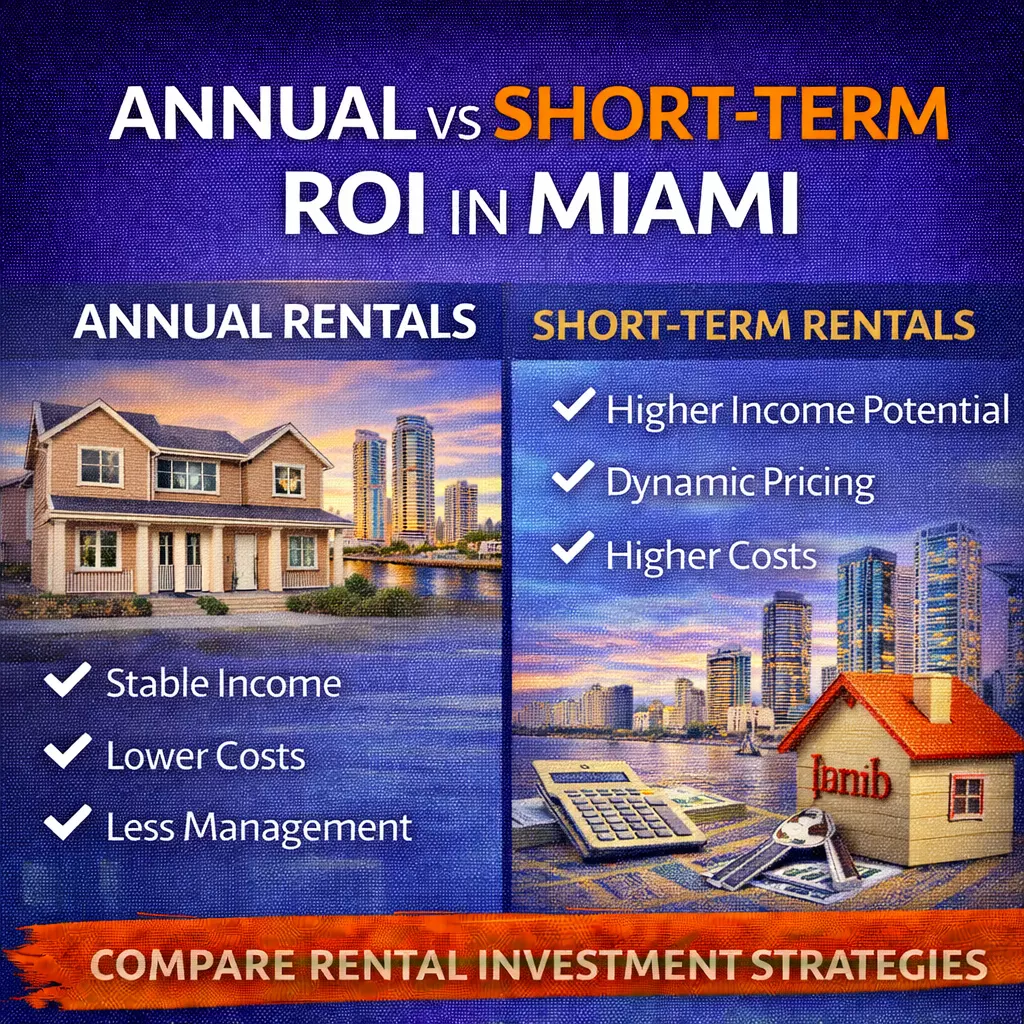
Annual vs Short‑Term ROI in Miami
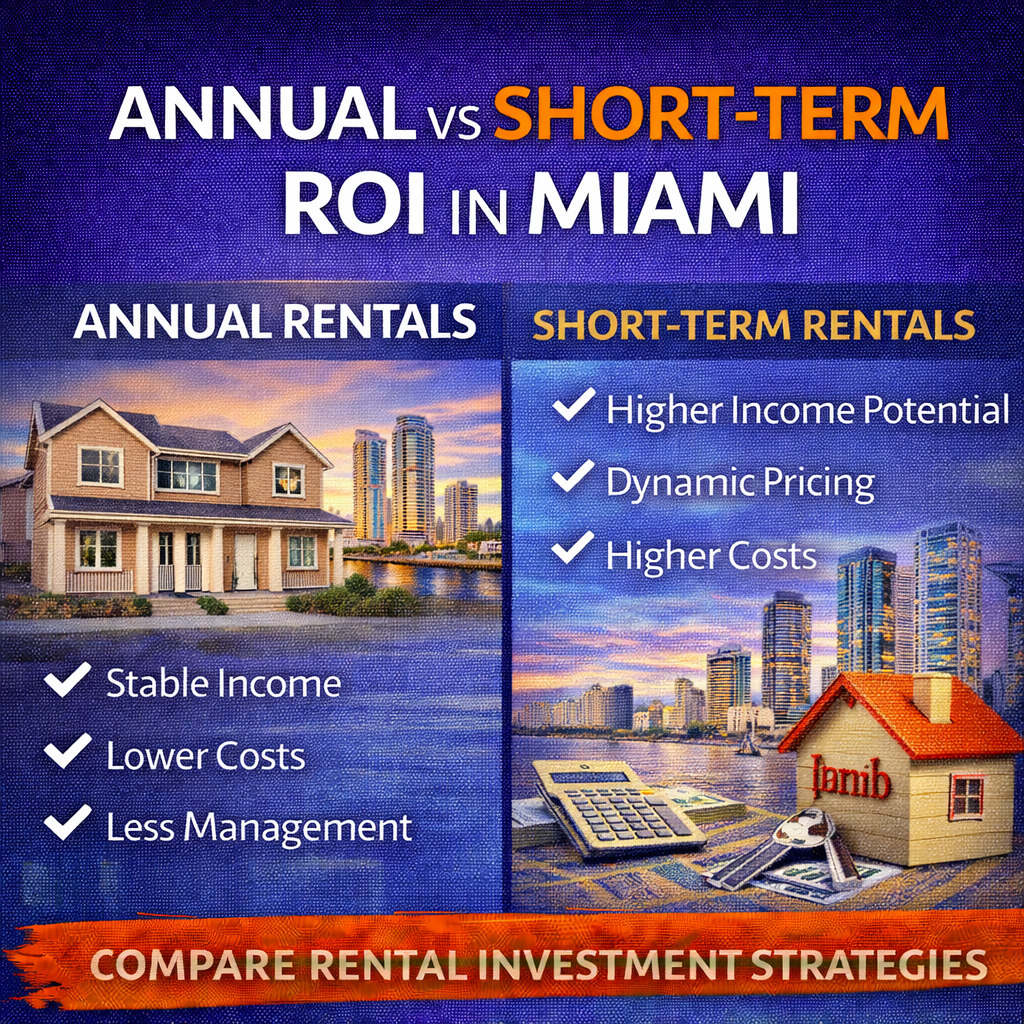
Compare annual vs short‑term ROI in Miami real estate. Learn which investment strategy — long‑term rentals or short‑term vacation rentals — delivers stronger returns based on income, expenses, vacancy, and market demand.
Introduction: Understanding ROI in Miami Real Estate
Investing in Miami real estate can be lucrative — but one of the biggest decisions investors face is whether to pursue annual (long‑term) rentals or short‑term rentals such as vacation or Airbnb properties. Each strategy offers distinct benefits and challenges, with different cash flow profiles, expenses, and return potentials.
In this blog, we’ll break down annual vs short‑term ROI in Miami, comparing the two approaches in terms of rental income, operating costs, vacancy, pricing flexibility, and investor suitability so you can choose the best path for your goals.
What Is ROI and Why It Matters
Return on Investment (ROI) measures how much income you earn relative to the money you’ve put into a property. A strong ROI helps ensure your investment pays off over time — whether through regular rental income or long‑term property value gains.
In Miami, ROI can vary significantly depending on:
-
Rental strategy (short‑term vs annual)
-
Neighborhood
-
Property type
-
Market conditions
Let’s dive deeper.
Annual (Long‑Term) Rental ROI Explained
An annual rental means leasing a property to a tenant for 12 months or more — often with automatic renewals. This strategy tends to deliver stable income over time.
Pros of Annual Rentals
-
Predictable monthly income
-
Lower turnover costs
-
Lower management intensity
-
Long‑term tenants reduce vacancy risk
Cons of Annual Rentals
-
Rental rates may be lower than short‑term rates
-
Less pricing flexibility based on seasonality
-
Income growth tied to slow rent escalations
Annual Rental ROI in Miami
Annual rental ROI is often rooted in consistent occupancy and lower operating costs. In neighborhoods with strong year‑round demand — such as Coral Gables, Brickell, or Coconut Grove — annual rentals attract professionals, families, and long‑term residents, stabilizing income.
Short‑Term Rental ROI Explained
A short‑term rental — like Airbnb or vacation‑style leasing — offers nightly or weekly stays. Miami’s tourism and travel appeal often keeps demand high for vacation rentals.
Pros of Short‑Term Rentals
-
Higher potential nightly rates
-
Seasonal pricing flexibility
-
Strong cash flow during peak travel times
-
Ability to adjust rates based on demand
Cons of Short‑Term Rentals
-
Higher turnover and operating costs
-
More management and guest communication
-
Seasonal vacancy risk
-
Potential legal restrictions in some buildings
Short‑Term ROI in Miami
Short‑term rentals in Miami — especially near beaches, downtown, and entertainment districts — can generate significantly higher income per night compared to annual rent rates. However, higher expenses (cleaning, utilities, marketing, platform fees) must be factored into ROI.
Head‑to‑Head ROI Comparison
1. Income Potential
Short‑Term: Often higher on a per‑night basis, especially in high‑demand seasons.
Annual: Lower per month compared to peak nightly income but more consistent.
2. Vacancy and Occupancy
Short‑Term: Higher risk of gaps between bookings — especially off‑season.
Annual: Usually more stable occupancy with a signed lease.
3. Expenses
Short‑Term: Cleaning, furnishing, utilities, guest turnover, platform fees, and marketing add up.
Annual: Mostly landlord costs like maintenance and property management — but lower overall.
4. Management Intensity
Short‑Term: Requires more active management or professional property management services.
Annual: Lower day‑to‑day involvement once tenants are placed.
5. Regulatory and Building Rules
Short‑Term: Must comply with local short‑term rental laws, HOA/condo restrictions, and tax requirements.
Annual: Generally simpler from a regulatory standpoint.
Which Strategy Is Right for You?
Choose Annual Rentals If:
-
You want dependable income and lower maintenance.
-
You prefer long‑term tenant relationships.
-
You want ease of management.
-
You’re investing in family‑oriented or professional rental markets.
Choose Short‑Term Rentals If:
-
You’re comfortable with more dynamic pricing and turnover.
-
You want to capitalize on Miami tourism demand.
-
You’re prepared to manage or outsource cleaning and guest services.
-
You can navigate short‑term rental rules and building policies.
Tips to Maximize ROI in Either Strategy
For Annual Rentals
-
Choose neighborhoods with strong year‑round demand.
-
Offer competitive amenities to attract quality tenants.
-
Screen tenants carefully to maintain occupancy.
For Short‑Term Rentals
-
Price dynamically based on peak travel periods and events.
-
Maintain excellent guest experiences for high reviews and repeat bookings.
-
Keep up with cleaning and maintenance to minimize negative reviews.
Conclusion: Choose the Strategy That Matches Your Goals
Understanding annual vs short‑term ROI in Miami helps you align your investment with your goals. Whether you prioritize stable income or higher flexible returns, Miami’s diverse rental market offers options for both strategies.
By evaluating income potential, vacancy patterns, cost structures, and management preferences, you can choose the rental strategy that fits your goals — and maximize your success in Miami’s vibrant real estate market.
Frequently Asked Questions (FAQs)
Is short‑term rental always more profitable than annual rental?
Not always. Short‑term rentals can generate higher income per night but come with higher expenses and vacancy risk. Annual rentals offer stable, predictable income with fewer costs.
Do short‑term rentals require more work?
Yes. Short‑term rentals involve guest communication, cleaning turnover, and dynamic pricing — which means more involvement unless you hire a manager.
Can a property switch between short‑term and annual rentals?
Some investors switch strategies based on season or market conditions — but this depends on local laws, HOA or condo policies, and rental demand.
Are short‑term rentals regulated in Miami?
Yes — short‑term rentals often have specific laws, licensing, or building restrictions that must be followed.
Is the rental market strong year‑round in Miami?
Miami’s tourism and year‑round warm climate support steady rental demand, but peak visitor seasons can drive higher short‑term occupancy.
Do annual rentals require furnishing?
Annual rentals are usually unfurnished, while short‑term rentals must be fully furnished and equipped for guest comfort.
Does ROI include appreciation?
ROI on rental strategy focuses on rental income — but overall investment also benefits from property appreciation over time.
Categories
Recent Posts










GET MORE INFORMATION
