10 Signs a Property Will Cashflow Real Estate Investment Indicators
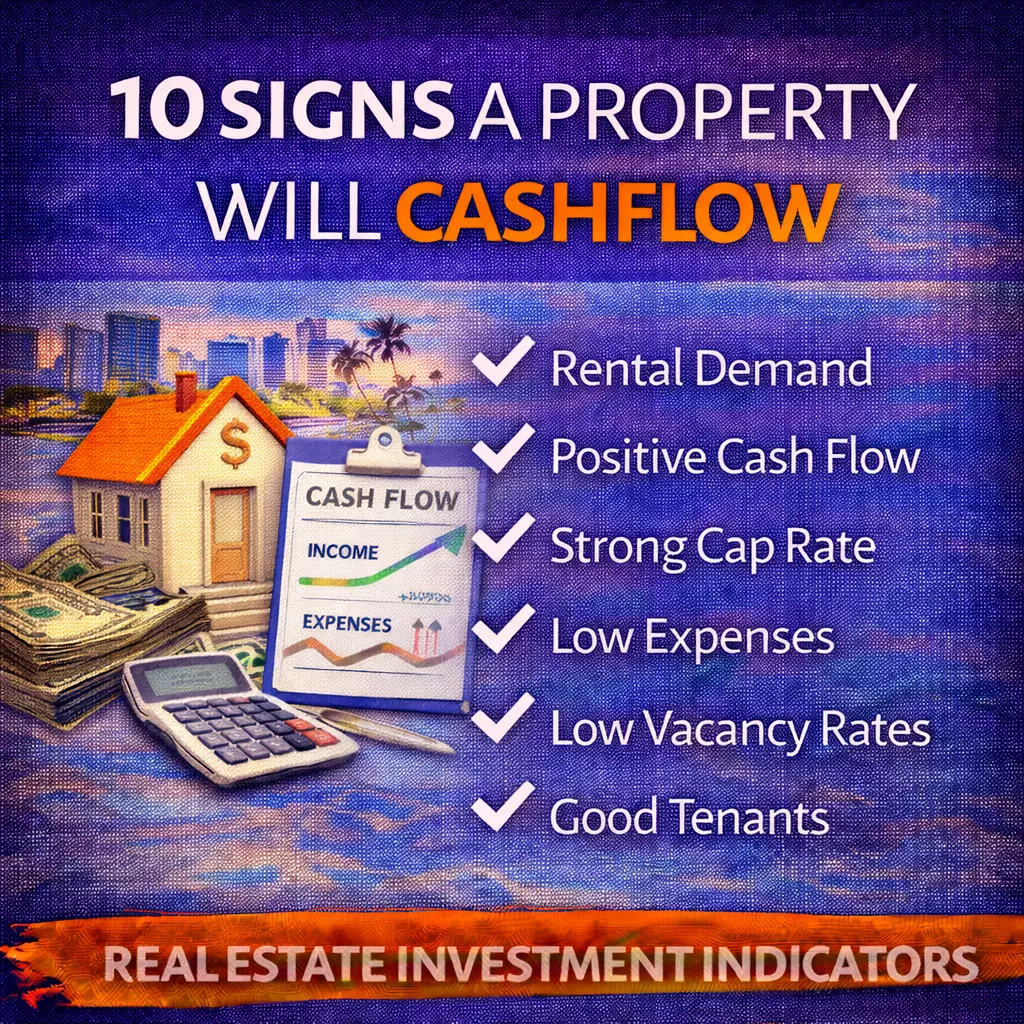
10 Signs a Property Will Cashflow
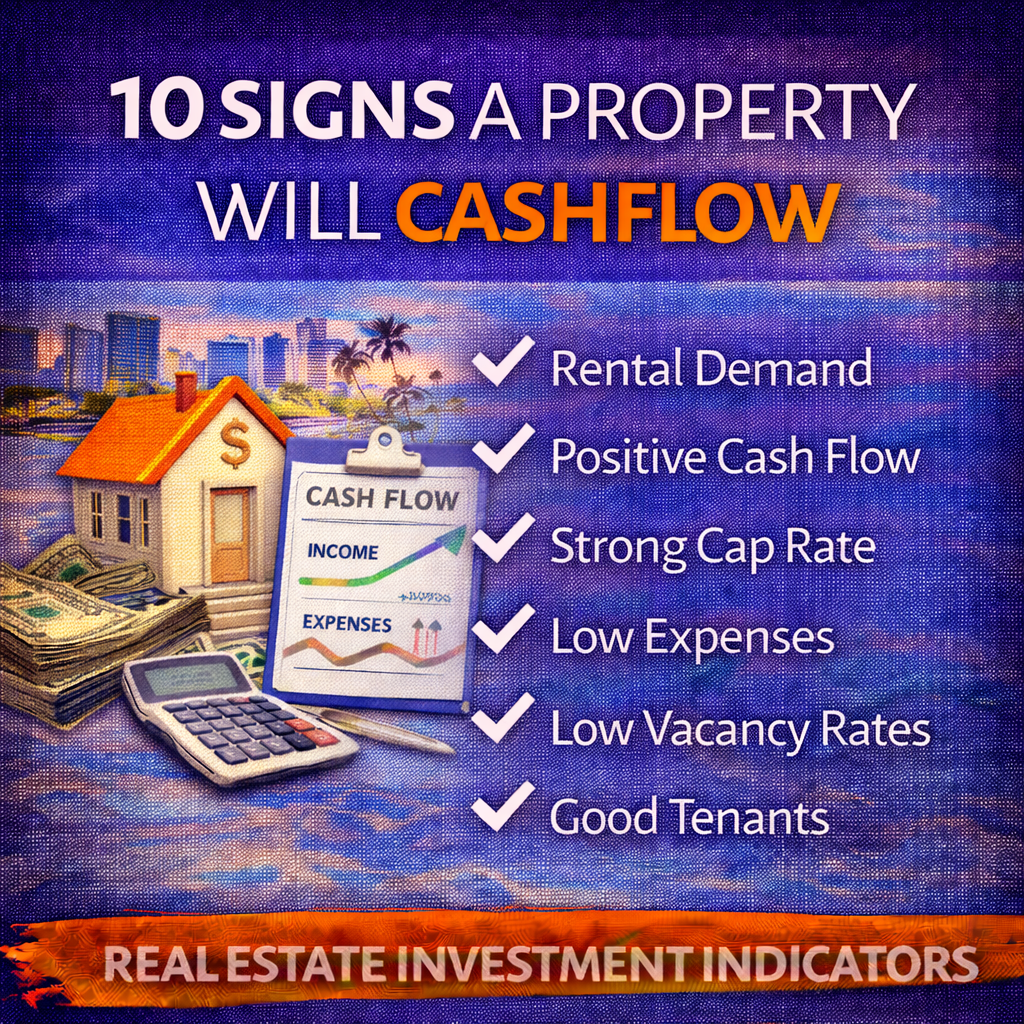
Learn the 10 signs a property will cashflow — including rental demand, positive cash flow, strong cap rate, low expenses, and market indicators you should consider before investing.
Introduction: What Does It Mean to Cashflow?
In real estate investing, achieving positive cash flow — where rental income exceeds all expenses — is a key goal. But how can you tell whether a property will cashflow before you buy it?
This guide covers the 10 signs a property will cashflow, giving you clear criteria to evaluate potential investments with confidence.
1. Solid Rental Demand in the Area
Properties located near job centers, transit routes, and amenities typically stay occupied longer and have consistent rental interest. High demand increases your chances of full occupancy.
2. Competitive Rental Rates
If comparable rentals command strong prices, that’s a sign the market supports higher rent, boosting income potential for your investment.
3. Positive Cash Flow Projections
The most obvious sign? Your rent minus expenses produces a positive figure. Use realistic rent and expense estimates — not optimistic ones.
4. Strong Cap Rate Relative to Market
A cap rate above local averages indicates stronger income relative to value — a good sign that a property will cashflow when managed properly.
5. Manageable Operating Expenses
Low recurring costs for insurance, taxes, and maintenance improve your profit margin. Make sure you know what typical expenses look like in the area before buying.
6. Low Vacancy Rates in the Neighborhood
Areas with low vacancy show healthy demand and less risk of losing income due to tenant turnover — an important indicator of future cashflow.
7. Good Tenant Profiles
Properties near universities, hospitals, or employment hubs often attract stable, long‑term tenants — helping you avoid frequent turnovers.
8. Appreciating Market Trends
While appreciation isn’t a direct cashflow factor, markets trending upward often see rent growth — which supports stronger income over time.
9. Updated or Well‑Maintained Features
Properties that don’t require immediate repairs or upgrades reduce your initial outlays and maintenance drains, helping maintain a positive cashflow early on.
10. Favorable Financing Terms
Lower interest rates, solid down payment, and conservative loan terms help ensure your monthly expenses don’t outpace rental income.
Conclusion
Predicting whether a property will cashflow comes down to understanding market forces, financial analysis, and property condition. By focusing on these 10 signs a property will cashflow, you’ll be better equipped to choose investments that support long‑term income, reduce risk, and build wealth over time.
Frequently Asked Questions
What’s the most important sign of cashflow potential?
Consistent positive net income after expenses.
Do rental demand and vacancy rates affect cashflow?
Yes — strong demand and low vacancies directly support consistent rental income.
Is a higher cap rate always better?
Generally yes, but it should be balanced with risk and property quality.
Should I consider tenant quality?
Absolutely. Good tenants reduce turnover, maintenance calls, and vacancy risk.
Can market appreciation boost cashflow?
Not directly, but rising rents in appreciating markets help increase income potential.
Categories
Recent Posts









GET MORE INFORMATION
