What Is an Earnest Money Deposit? Miami Homebuyer Guide
What Is an Earnest Money Deposit?
Learn what an earnest money deposit is, why it matters, how much to offer in Miami real estate deals, where it goes, and what happens if you cancel. A clear explanation for homebuyers.
Introduction: The Role of Earnest Money in Real Estate
When buying a home in Miami — whether in Coral Gables, Coconut Grove, Brickell, or Miami Beach — one of the first financial steps you’ll encounter is the earnest money deposit (EMD). This is a key part of making a serious offer and helps both buyers and sellers feel confident the deal is moving forward.
What Is an Earnest Money Deposit?
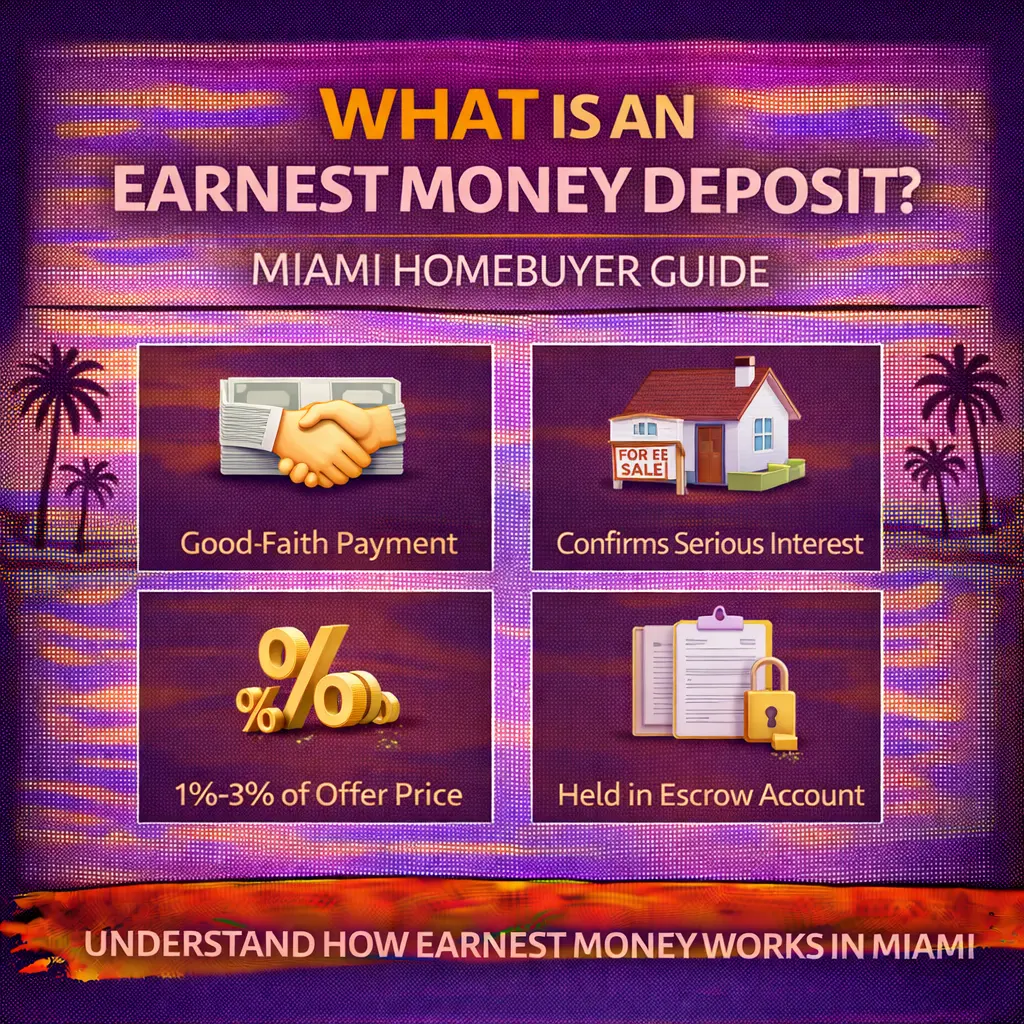
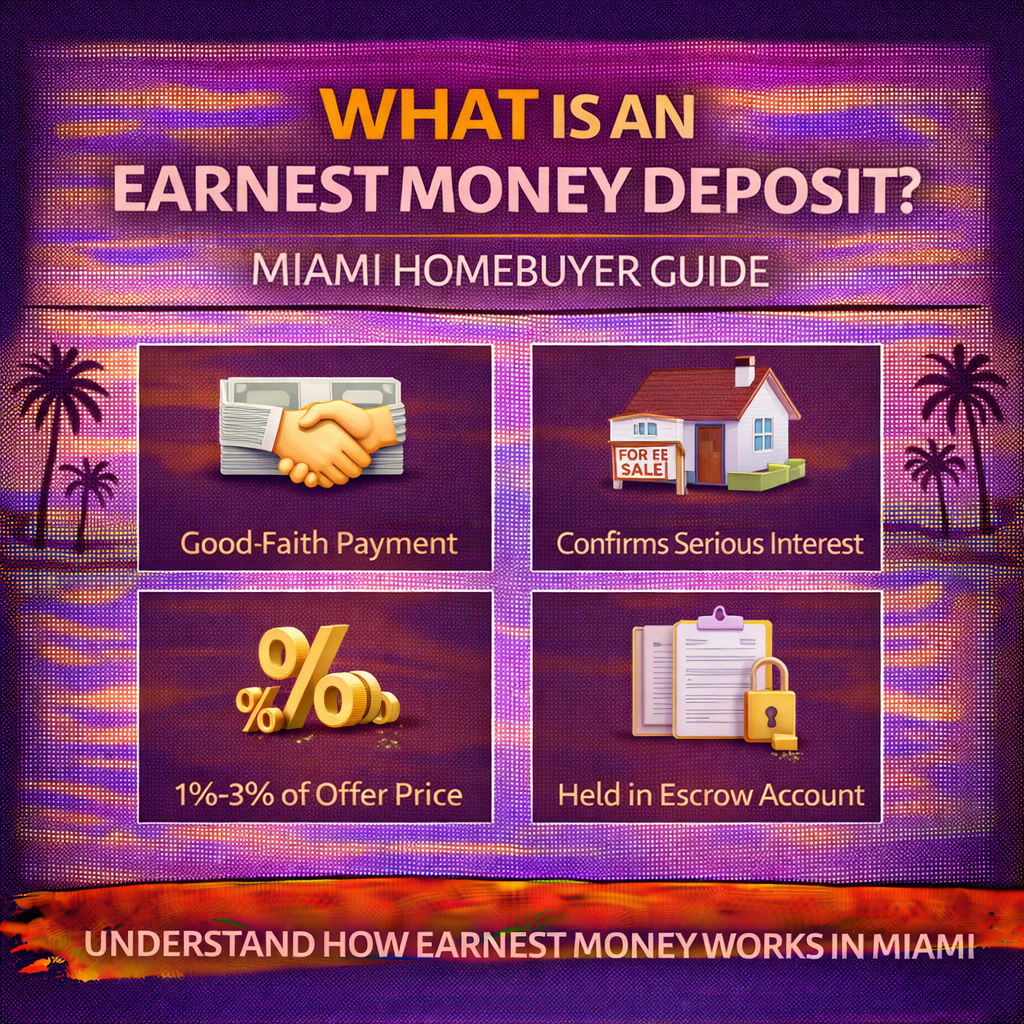
An earnest money deposit is a good‑faith payment you make when your offer to buy a property is accepted. It shows the seller you are serious about purchasing the home. Think of it as a financial handshake — you’re signaling commitment.
In Miami, earnest money might be required whether you’re buying a condo near Wynwood or a single‑family home in Pinecrest.
How Much Is an Earnest Money Deposit?
There’s no fixed percentage, but common practices include:
-
1%–3% of the purchase price
-
Sometimes higher in competitive markets like South Beach or Key Biscayne
For example, on a $500,000 home near Little Havana, a 2% deposit would be $10,000.
Where Does the Earnest Money Go?
Once your offer is accepted, the earnest money is typically held in an escrow account by a neutral third party (such as a title company). It stays there until closing.
(We’ll explain escrow in more detail in the next blog!)
What Happens to the Earnest Money?
If the sale goes through:
The earnest money is applied toward your down payment or closing costs.
If the deal falls through due to contingencies:
If your contract has valid contingencies — like a financing or inspection contingency — and those conditions aren’t met, you may get your earnest money back.
If you back out without valid reasons:
In competitive areas like Downtown Miami, walking away for reasons not covered by contingency may mean you forfeit your earnest money.
Tips for Miami Homebuyers
-
Work with an experienced agent especially in competitive markets like Brickell or Coral Gables where offers can be multiple.
-
Include strong but reasonable earnest money to demonstrate commitment while protecting your funds.
-
Understand your contract’s contingencies so you know when your earnest money is refundable.
Conclusion: Earnest Money Matters
An earnest money deposit is a fundamental part of the home‑buying process in Miami (and beyond). It shows seriousness, helps secure your offer, and becomes part of your purchase funds — as long as you understand the terms and conditions tied to it.
Frequently Asked Questions (FAQs)
Is earnest money required in every offer?
Most sellers expect it, especially in busy markets.
Can I lose my earnest money?
Yes — if you back out for reasons not covered by contingencies.
Who holds the earnest money?
Typically a neutral third party — a title company or escrow agent — until closing.
Does the earnest money count toward my purchase price?
Yes, it’s credited toward your total due at closing.
Categories
Recent Posts






GET MORE INFORMATION
