What Is a 1031 Exchange Miami Real Estate Tax Strategy Explained
What Is a 1031 Exchange?
Learn what a 1031 exchange is, how it helps real estate investors defer taxes, and how it works for properties in Miami areas like Brickell, Miami Beach, Coral Gables, and Key Biscayne.
Introduction: Investing Smarter with a 1031 Exchange
If you’re a real estate investor in the Miami area — buying or selling investment properties in Brickell, Miami Beach, Coral Gables, or Key Biscayne — you may hear about a 1031 exchange. This tax strategy can help you defer capital gains taxes and grow your real estate portfolio more efficiently.
What Is a 1031 Exchange?
A 1031 exchange (named after Section 1031 of the U.S. Internal Revenue Code) allows you to defer paying capital gains taxes when you sell an investment property, as long as you reinvest the proceeds into another “like‑kind” property within certain timeframes.
This means you can sell an income property in Coconut Grove and buy another investment in Sunny Isles Beach without immediately paying taxes on the profit.
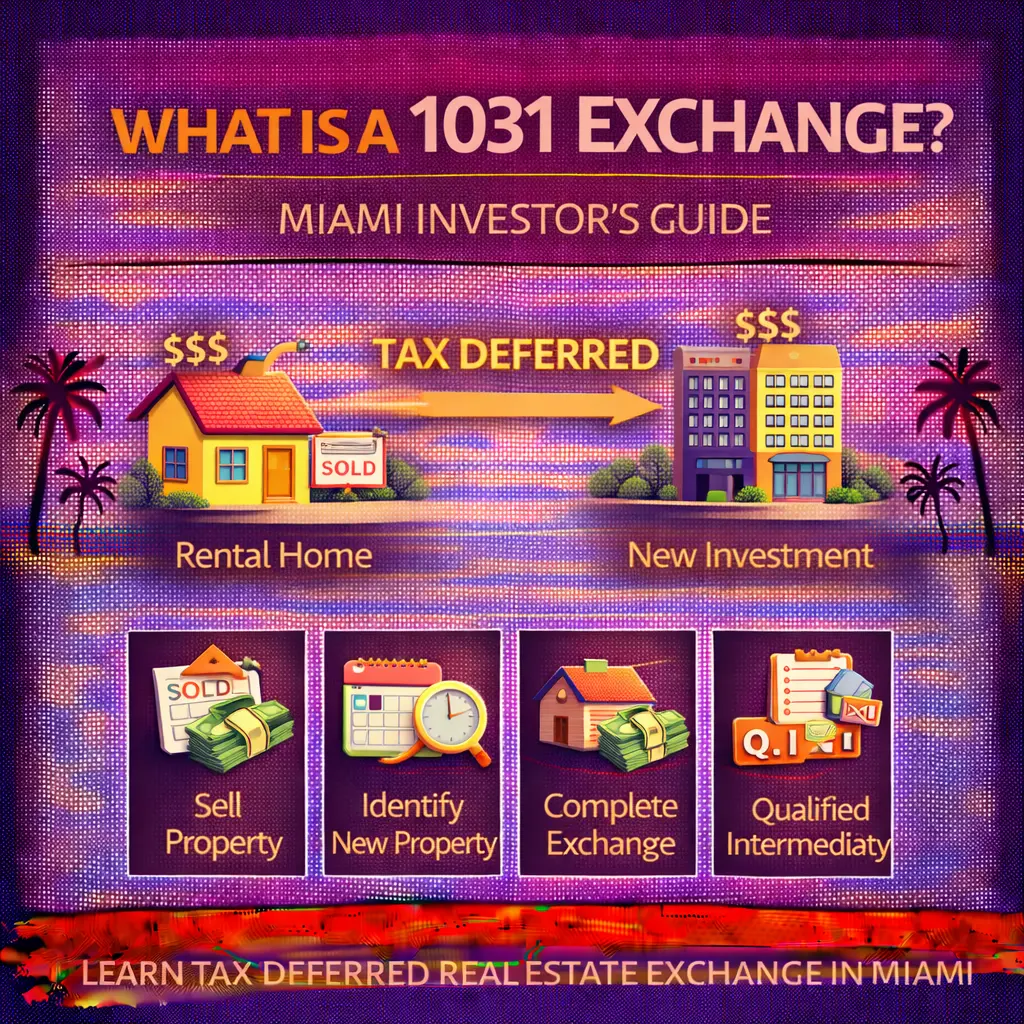
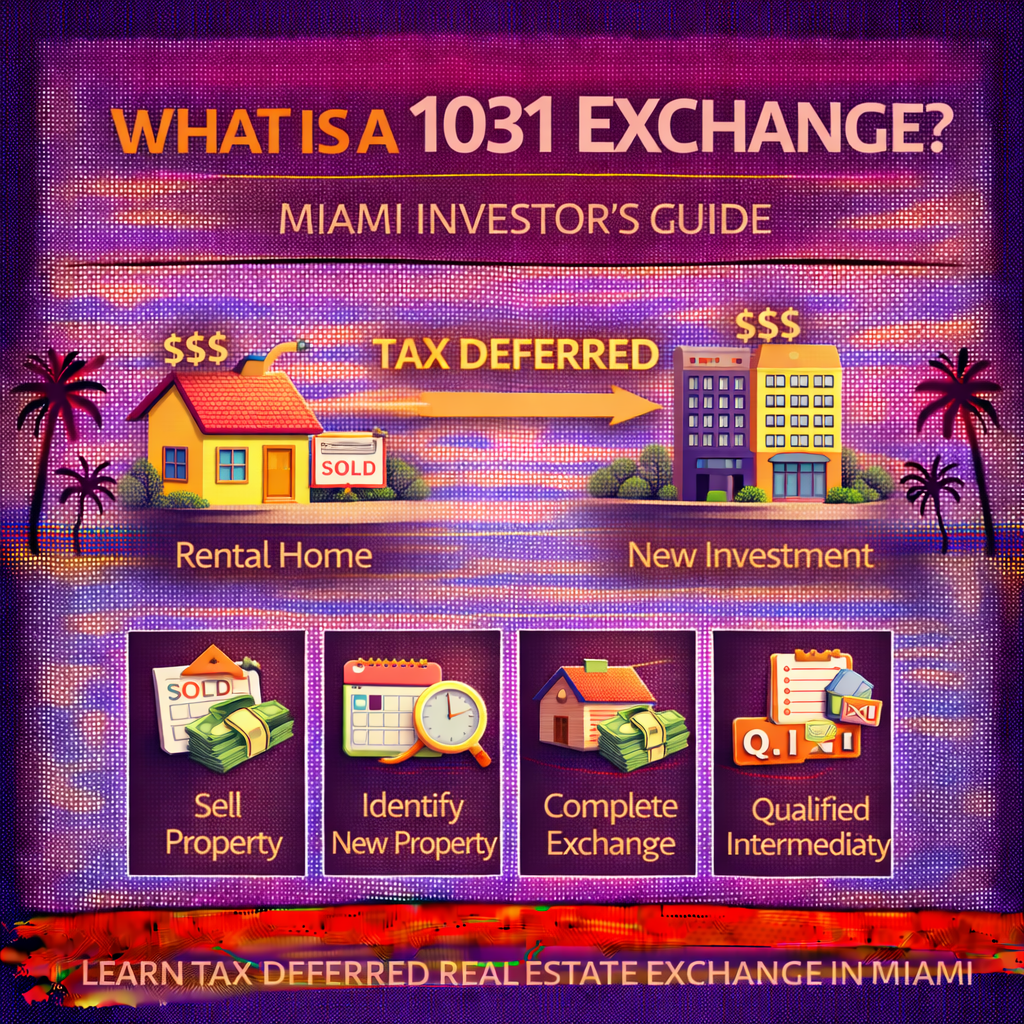
How It Works — The Basics
-
Sell Your Investment Property
You sell your property (e.g., a rental home in Doral). -
Identify Replacement Property
Within 45 days of closing, you must identify the next property you plan to buy. -
Complete the Exchange
You must close on the new property within 180 days of selling the old one. -
Use a Qualified Intermediary
A neutral party holds the sale proceeds until they’re used to purchase the replacement property.
If you follow all rules, you can defer capital gains taxes that might otherwise be due at closing.
Why Investors Use 1031 Exchanges
-
Increase buying power: Instead of paying taxes, you reinvest more of your equity.
-
Upgrade properties: You can trade up from older properties to newer ones or better locations — for example, trading a single‑family home in Westchester for a multi‑unit building in Little Havana.
-
Build a portfolio: Repeated exchanges allow long‑term growth without immediate tax impact.
Local Miami Examples
Imagine you own a rental property in Midtown Miami with significant appreciation. You sell it and identify a larger multi‑family property in Little Haiti. By doing a 1031 exchange, you defer the capital gains tax and invest those funds into the new purchase, expanding your portfolio faster.
Conclusion: Smart Tax Strategy for Miami Investors
A 1031 exchange can be a powerful tool for real estate investors in Miami. By deferring taxes and reinvesting equity, you can expand your investment portfolio in areas like Brickell, Miami Beach, and Coral Gables more effectively.
Frequently Asked Questions (FAQs)
Do I have to pay taxes eventually?
Yes — you defer them. Taxes are due when you sell without a subsequent exchange.
What counts as “like‑kind”?
Most real estate held for investment is eligible, so you can exchange a rental home for a commercial building.
Can I live in the new property?
If it was an investment before and you later convert it to personal use, consult a tax advisor — rules vary.
Categories
Recent Posts









GET MORE INFORMATION
