What Is PMI and How to Avoid It Miami Homebuyer Guide
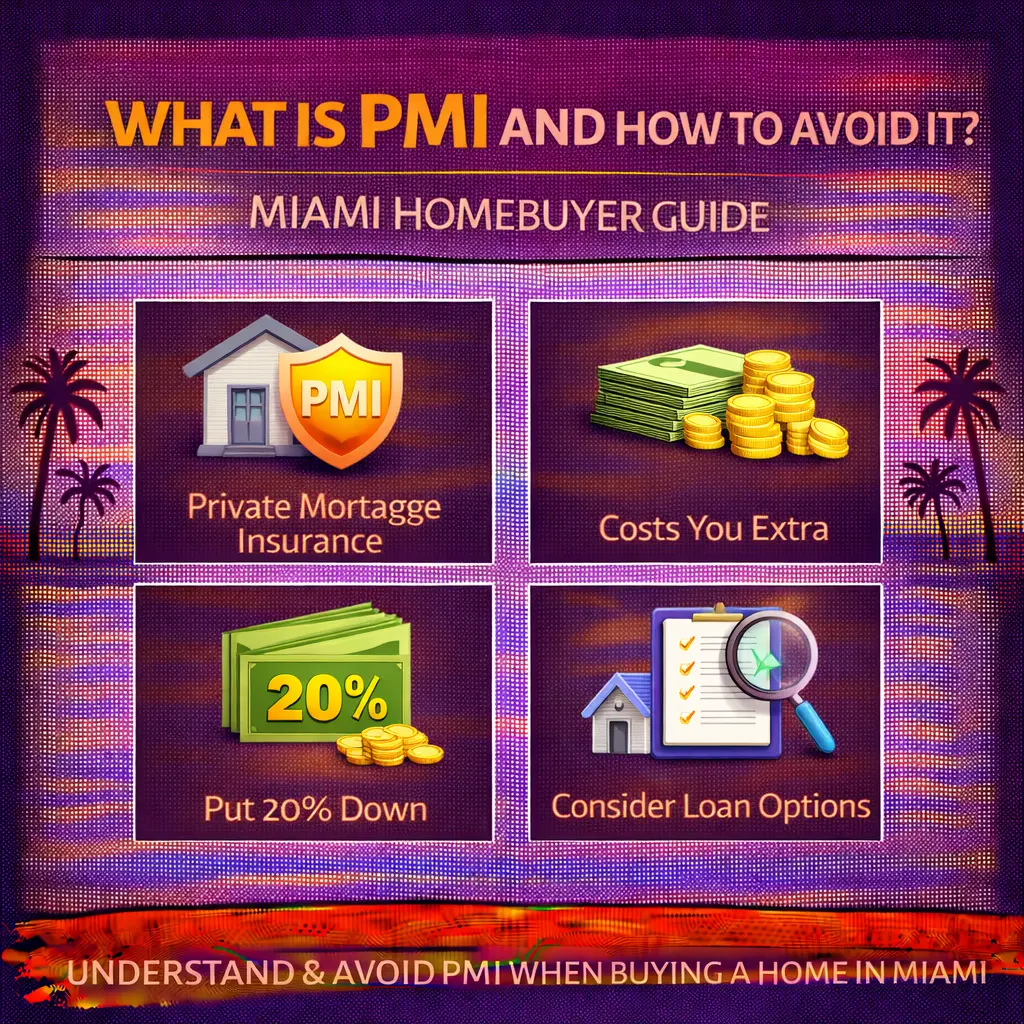
What Is PMI and How to Avoid It?
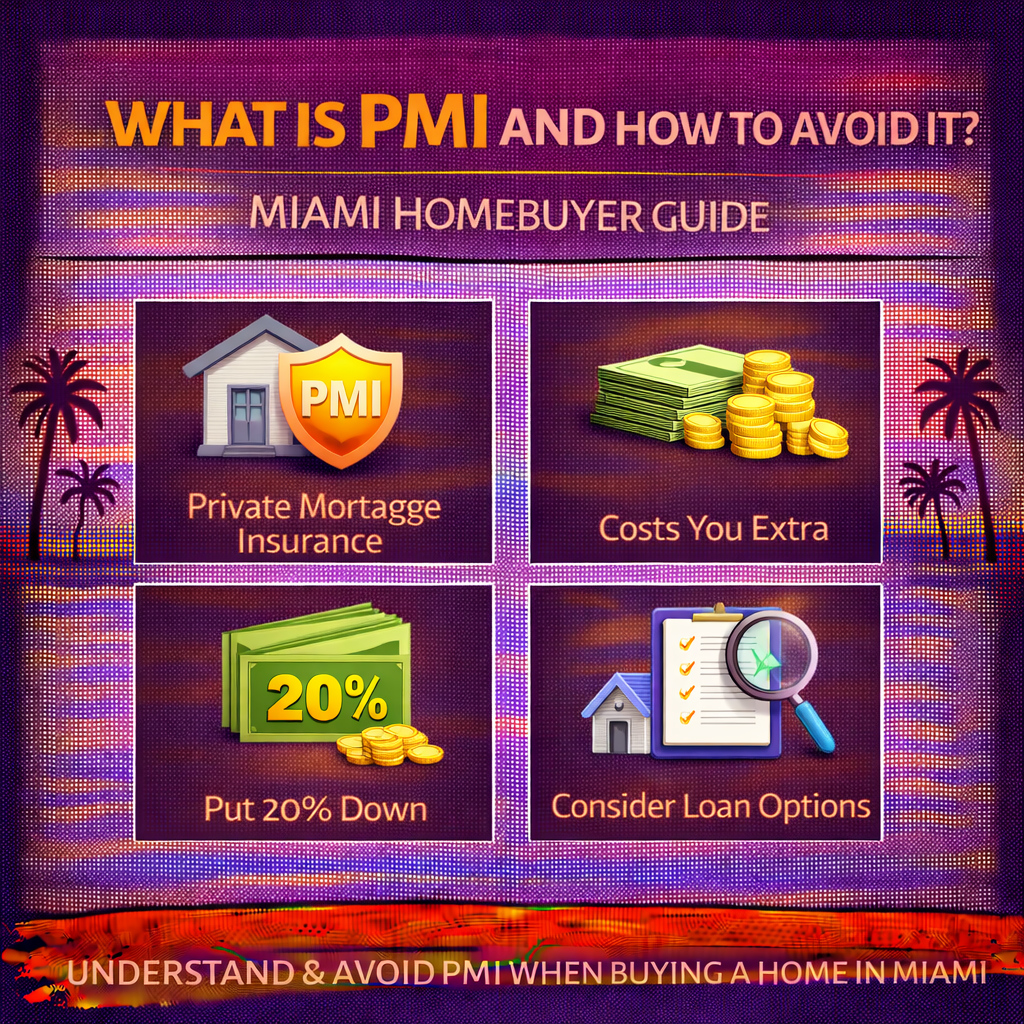
Understand what PMI (Private Mortgage Insurance) is, why lenders require it, how it affects Miami homebuyers, and strategies to avoid PMI on homes in areas like Coral Gables, Miami Beach, and Kendall.
Introduction: PMI in the Home Buying Process
When purchasing a home in Miami — whether a modern condo in Brickell, a bungalow in Coconut Grove, or a single‑family home in Kendall — you might hear the term PMI. But what is PMI, and how can it affect your mortgage payments?
This guide explains what PMI is, why lenders require it, and how you can avoid paying PMI on your Miami home loan.
What Is PMI?
PMI stands for Private Mortgage Insurance. It is insurance that protects your lender if you fail to repay your mortgage. Typically, lenders require PMI if your down payment is less than 20% of the home’s purchase price.
For example, if you’re buying a $500,000 home near South Miami and put down less than $100,000, your lender will likely require PMI.
How PMI Works
PMI is usually added to your monthly mortgage payment. While it protects the lender, it does not protect you — the borrower. It’s essentially a cost you pay until you have sufficient equity in your home.
Ways to Avoid PMI
1. Save a 20% Down Payment
The most straightforward way to avoid PMI is to put 20% or more down at closing.
For example, on a Coral Gables home priced at $600,000, putting down $120,000 (20%) avoids PMI entirely.
2. Use a Piggyback Loan (80/10/10)
Some lenders offer second mortgages that can help you avoid PMI. In an 80/10/10 structure:
-
First mortgage = 80%
-
Second mortgage = 10%
-
Down payment = 10%
This keeps your first mortgage below the 80% threshold that triggers PMI.
3. Ask for Lender‑Paid Mortgage Insurance
Some lenders include PMI that’s built into a slightly higher interest rate instead of a separate PMI payment. It’s worth comparing options.
4. Improve Your Credit Score
A better credit score can sometimes help you qualify for loans with lower PMI requirements or better mortgage terms.
When Does PMI Go Away?
Once your loan balance drops to 78% of the original value (i.e., you have 22% equity), lenders must often drop PMI. You can also request removal when you reach 20% equity.
Conclusion: Understanding & Avoiding PMI in Miami
PMI can add several hundred dollars to your monthly mortgage payment — but with planning, a strong down payment, or smart financing strategies, many Miami homebuyers avoid it. Whether you’re buying in Miami Beach, Doral, or West Miami, understanding PMI helps you budget and secure the best mortgage terms.
Frequently Asked Questions (FAQs)
Is PMI tax deductible?
Tax rules change — check current tax law or a tax professional for applicability.
Does PMI protect me?
No — it protects the lender, not the homeowner.
Can I refinance to remove PMI?
Yes — refinancing after building equity can eliminate PMI if the new loan falls below 80% loan‑to‑value.
Categories
Recent Posts








GET MORE INFORMATION
