What Is Cash‑to‑Close Miami Homebuyer Financial Guide
What Is a Cash‑to‑Close?
Discover what “cash‑to‑close” means in real estate, what expenses are included, and how homebuyers in Miami neighborhoods like Miami Beach, Coconut Grove, and Brickell should prepare financially for closing day.
Introduction: Cash‑to‑Close — What Buyers Should Know
When buying property in Miami — whether a Miami Beach condo, a Coral Gables family home, or a sleek Brickell residence — you’ll hear the term cash‑to‑close. It’s a key figure in every home purchase, and understanding it helps ensure you arrive at your closing fully prepared.
What Is Cash‑to‑Close?
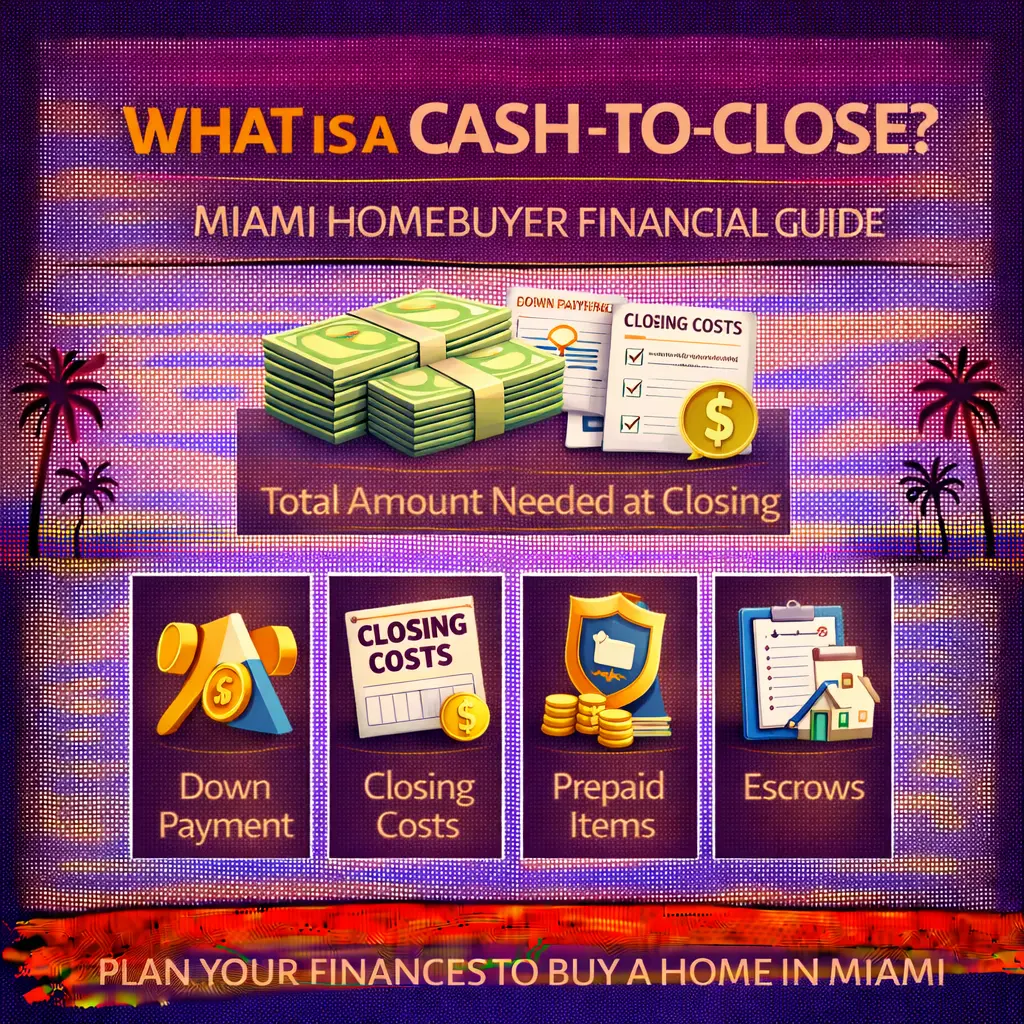
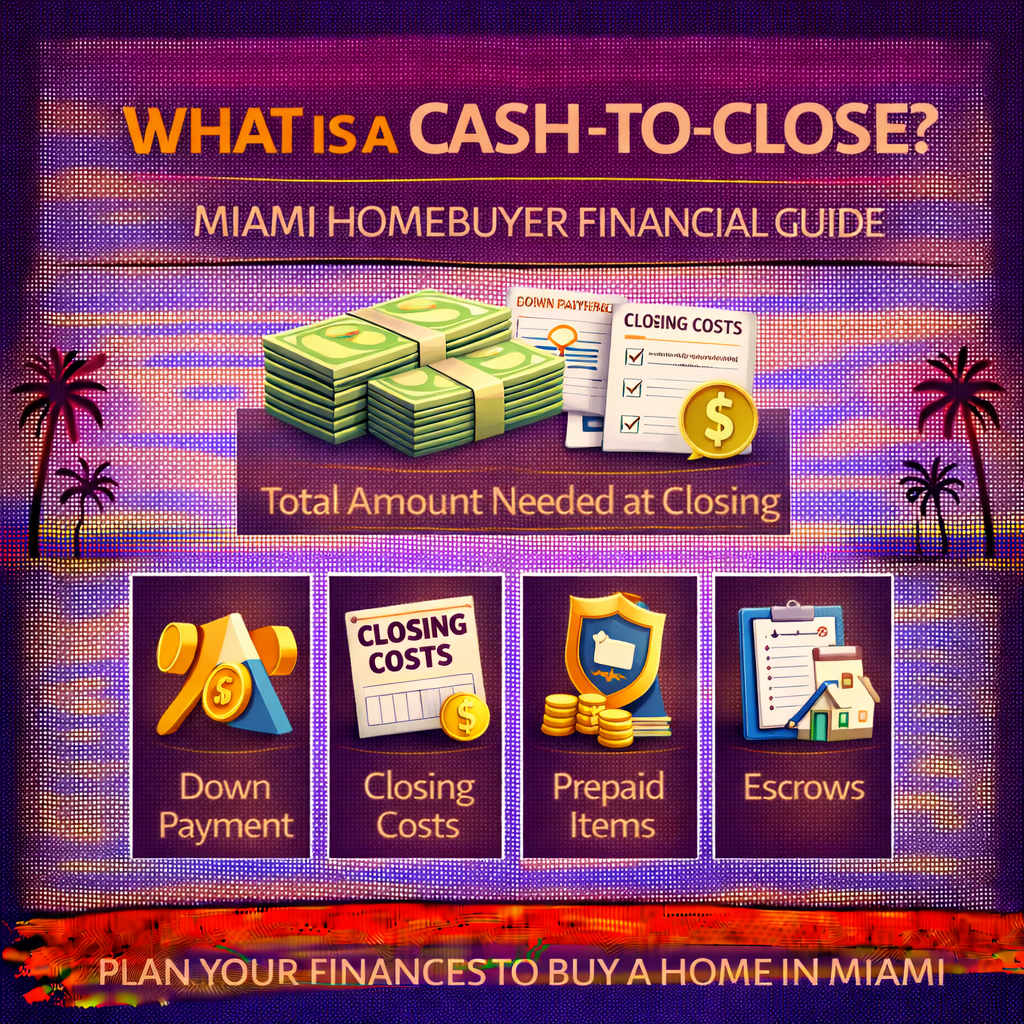
Cash‑to‑close is the total amount of money you must bring to your closing appointment — the final meeting where you sign documents and take ownership of the home.
This amount includes:
-
Down payment
-
Closing costs
-
Prepaid items (insurance, taxes)
-
Any prorated fees
It’s not the same as just the down payment — it’s the total out‑of‑pocket amount due at closing.
Example: Cash‑to‑Close Calculation
Imagine you’re buying a condo near Sunny Isles Beach for $500,000 with:
-
20% Down Payment = $100,000
-
Closing Costs = $12,000
-
Prepaids & Escrows = $3,000
Your cash‑to‑close = $115,000 (this is the total you’d need at closing, not just your down payment).
Components of Cash‑to‑Close
Down Payment
Typically a percentage of the purchase price — varies by loan type.
Closing Costs
Includes title, appraisal, loan processing, escrow fees, and more.
Prepaid Items
Often include:
-
Homeowner’s insurance
-
Property taxes
-
Mortgage interest
Escrow Reserves
Some lenders require reserves for future tax and insurance payments.
How to Prepare for Cash‑to‑Close
1. Get a Clear Loan Estimate
Lenders must provide a Loan Estimate showing expected cash‑to‑close. This helps you budget ahead.
2. Save More Than You Think
Unexpected minor fees sometimes appear at closing — it’s wise to have a cushion.
3. Verify Funds Requirements
Lenders often require certified funds (like cashier’s check or wire transfer) — not personal checks.
Why Cash‑to‑Close Matters
Knowing your cash‑to‑close early in the process — whether you’re closing on a Coconut Grove property or a Miami Beach penthouse — allows you to:
-
Avoid closing delays
-
Budget responsibly
-
Compare loan offers effectively
Conclusion: Cash‑to‑Close — Plan Ahead for Closing Day
Understanding cash‑to‑close empowers Miami homebuyers — whether you’re purchasing in Brickell, Coral Gables, or Miami Beach — to prepare financially and approach closing day with confidence. Budget early, ask questions, and be ready so you can take ownership smoothly.
Frequently Asked Questions (FAQs)
Is cash‑to‑close the same as the down payment?
Not usually — it includes the down payment plus closing costs and prepaids.
Can cash‑to‑close be included in the loan?
Typically no — it’s required out of pocket at closing.
Do closing costs always have to be paid at closing?
Most are due at closing, but some can be financed or negotiated.
Categories
Recent Posts





GET MORE INFORMATION
