
Most Appreciating Buildings in Miami Top Real Estate Value Gains
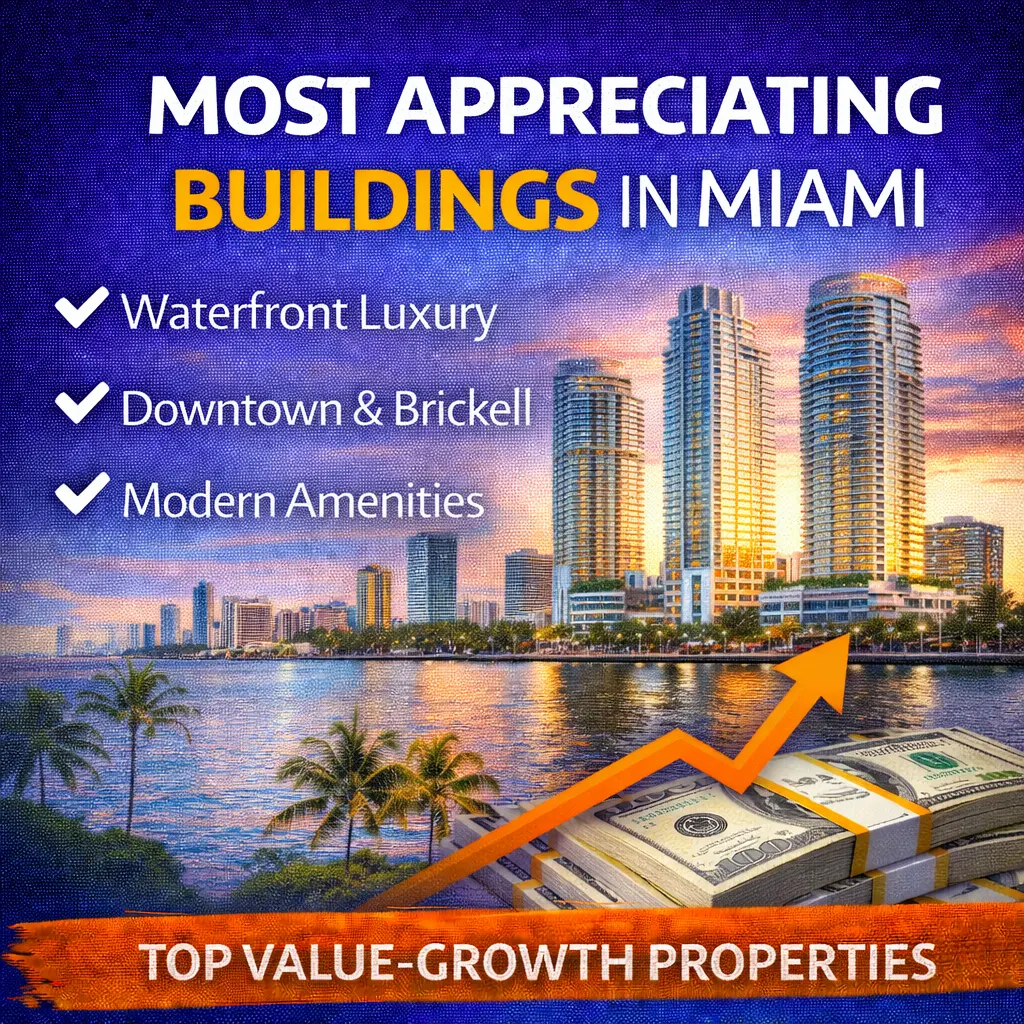
Most Appreciating Buildings in Miami
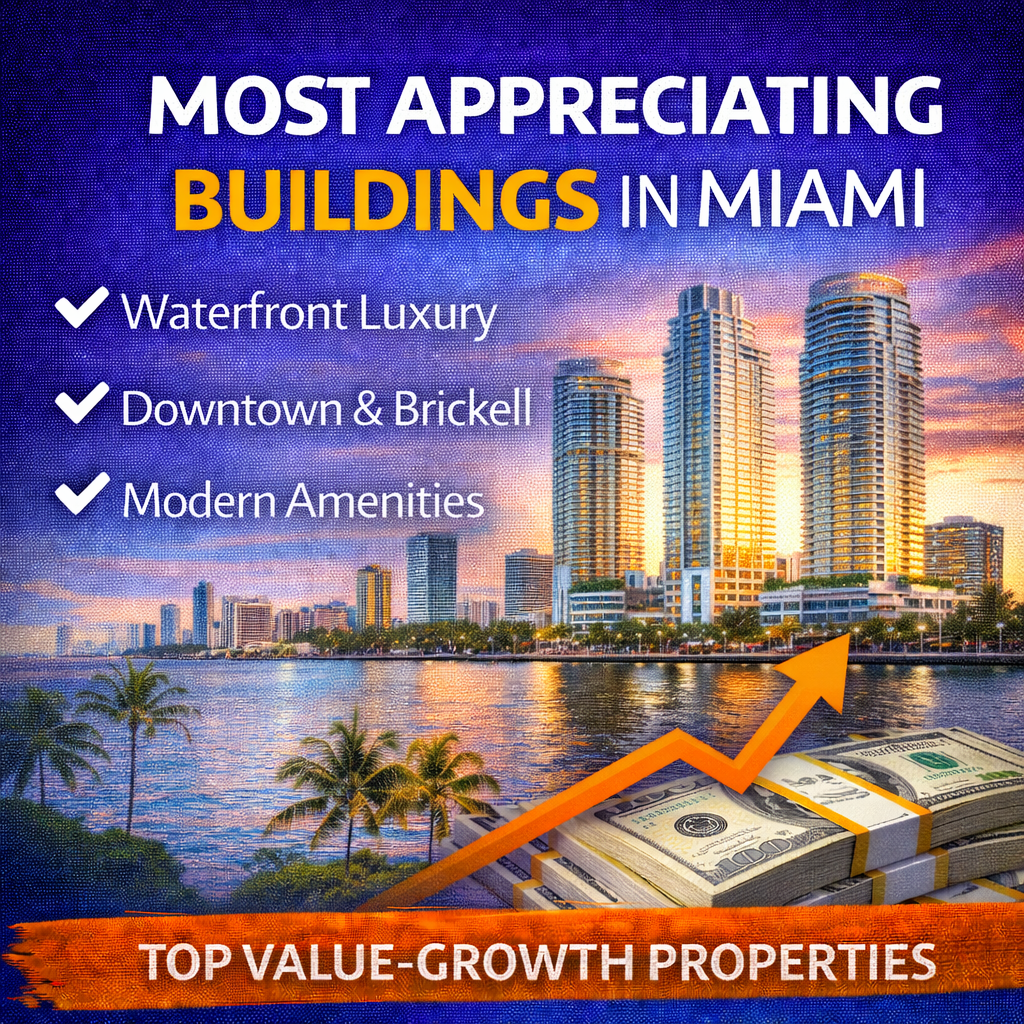
Discover the most appreciating buildings in Miami real estate. Explore top properties with strong value growth, what drives appreciation, and how buyers and investors can benefit from price momentum.
Introduction: Why Appreciation Matters in Miami Real Estate
In Miami’s dynamic property market, certain buildings have stood out not just for their location or amenities, but for significant value appreciation over time. Understanding which buildings appreciate the most — and why — helps buyers, sellers, and investors make smarter decisions.
In this blog, we’ll explore what makes some Miami buildings appreciate more than others in value, highlight key examples of high‑performing properties, and explain the factors that drive appreciation in this vibrant city.
What “Appreciation” Means in Real Estate
Real estate appreciation refers to the increase in property value over time. Appreciation can be driven by:
-
Market demand
-
Improvements to the building
-
Neighborhood growth and development
-
Limited supply
-
Economic trends
In Miami, appreciation tends to be strong in buildings with desirable locations, attractive amenities, and solid management — all factors that influence long‑term value.
Top Factors Driving Appreciation in Miami Buildings
Before we highlight specific properties, it’s important to understand why certain buildings enjoy higher appreciation:
1. Location and Accessibility
Buildings near beaches, major employment hubs, transit, and entertainment districts typically see stronger value gains.
2. Modern Amenities and Design
Properties with updated features like fitness centers, concierge services, smart home tech, and luxury finishes attract higher demand.
3. Quality Property Management
Buildings with excellent maintenance and professional management retain value better and attract long‑term buyers.
4. Neighborhood Revitalization
Areas with ongoing development — retail, parks, transit, and cultural hubs — often experience rising property values.
5. Limited Supply
Buildings with fewer units or unique architectural appeal face less competition, helping support price momentum.
Most Appreciating Buildings in Miami (General Examples)
The following are examples of types of buildings in Miami that have historically seen strong appreciation. These represent general categories and trends, not specific performance guarantees.
1. Luxury Waterfront High‑Rises
Waterfront properties — especially those with panoramic ocean views — consistently move up in value due to scarcity and desirability. Residences with direct bay or ocean views remain top choices for investors and lifestyle buyers alike.
2. Downtown Miami and Brickell Towers
Skyscrapers in Downtown and Brickell appeal to urban professionals and investors. Their proximity to business districts, nightlife, and transportation correlates with strong resale demand and price growth.
3. Boutique Condos in Historic Districts
Smaller boutique condominium buildings in areas like Miami Beach or Coconut Grove often experience significant appreciation because of their character, charm, and limited availability.
4. Newer Developments With Modern Features
Recently completed or contemporary buildings with advanced amenities tend to command higher prices soon after launch and show strong upward value momentum as demand grows.
5. Mixed‑Use Developments
Properties that combine residential units with retail or hospitality elements benefit from diverse demand drivers. These are often located near walkable lifestyle centers, helping boost long‑term appeal.
How Appreciation Benefits Buyers and Investors
Understanding which buildings appreciate most can help you:
• Maximize Equity Growth
Buying into appreciating properties positions you to benefit when values rise.
• Build Long‑Term Wealth
Properties with strong appreciation histories contribute to stronger equity and potential returns when selling or refinancing.
• Attract Rental Demand
Buildings with high appreciation often attract renters — further supporting investor income.
• Enhance Resale Value
Appreciated properties generally sell more favorably in competitive markets.
Timing and Market Conditions
While appreciation is influenced by building qualities, market timing also matters. Appreciation tends to perform best when:
-
Overall demand is strong
-
Inventory is limited
-
Economic fundamentals are stable
-
Interest rates support buyer activity
Tracking local trends and timing your purchase strategically can help you enter into buildings with strong growth potential at the right moment.
Conclusion: Understanding Miami’s Appreciation Leaders
The most appreciating buildings in Miami often combine location, design, management, and demand into a package that buyers value. Whether you’re seeking a primary residence, investment property, or second home, recognizing the trends that drive appreciation helps you make informed decisions and align your real estate goals with market realities.
By focusing on quality, desirability, and strategic timing, you position yourself to benefit from Miami’s dynamic real estate appreciation patterns.
Frequently Asked Questions (FAQs)
What makes a building appreciate more than others?
Buildings with prime locations, high‑quality amenities, and strong demand tend to appreciate faster than average properties.
Does waterfront location increase appreciation?
Yes. Waterfront buildings are often more desirable and scarce, which can support stronger long‑term appreciation.
Are new buildings more likely to appreciate?
Newer buildings with modern features and amenities frequently attract buyers, which can lead to competitive pricing and stronger appreciation.
Does neighborhood growth impact appreciation?
Yes. Areas experiencing development — such as new retail, transit, and public spaces — typically see property values rise faster.
Can investor demand drive appreciation?
Investor interest often increases demand in certain buildings, especially those with strong rental markets or income potential.
Is appreciation guaranteed in certain buildings?
No. While some buildings show stronger historical trends, appreciation depends on market conditions, economic trends, and buyer demand.
Should buyers consider appreciation when choosing a building?
Absolutely. Understanding factors that influence appreciation helps buyers make strategic decisions that align with long‑term goals.
Categories
Recent Posts









GET MORE INFORMATION
