
Mistakes Miami Investors Make Common Real Estate Blunders to Avoid
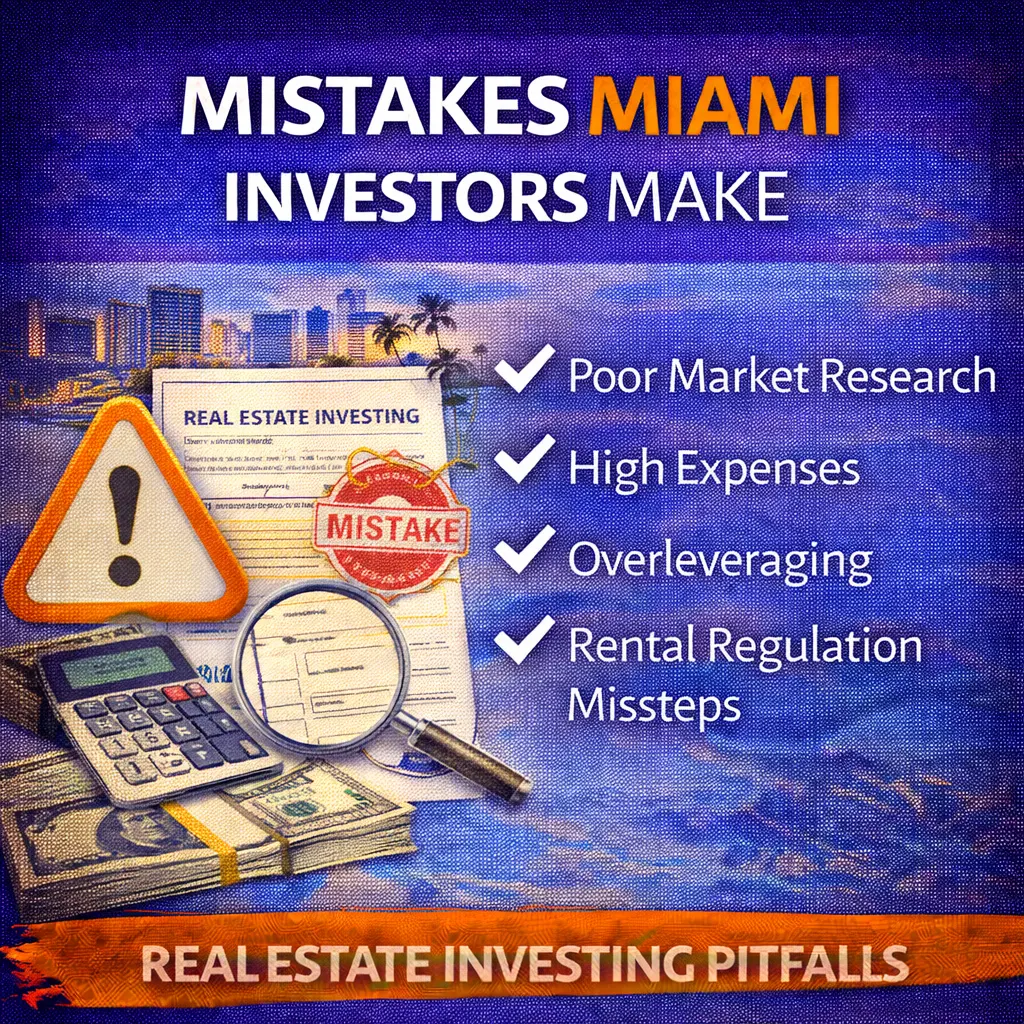
Mistakes Miami Investors Make
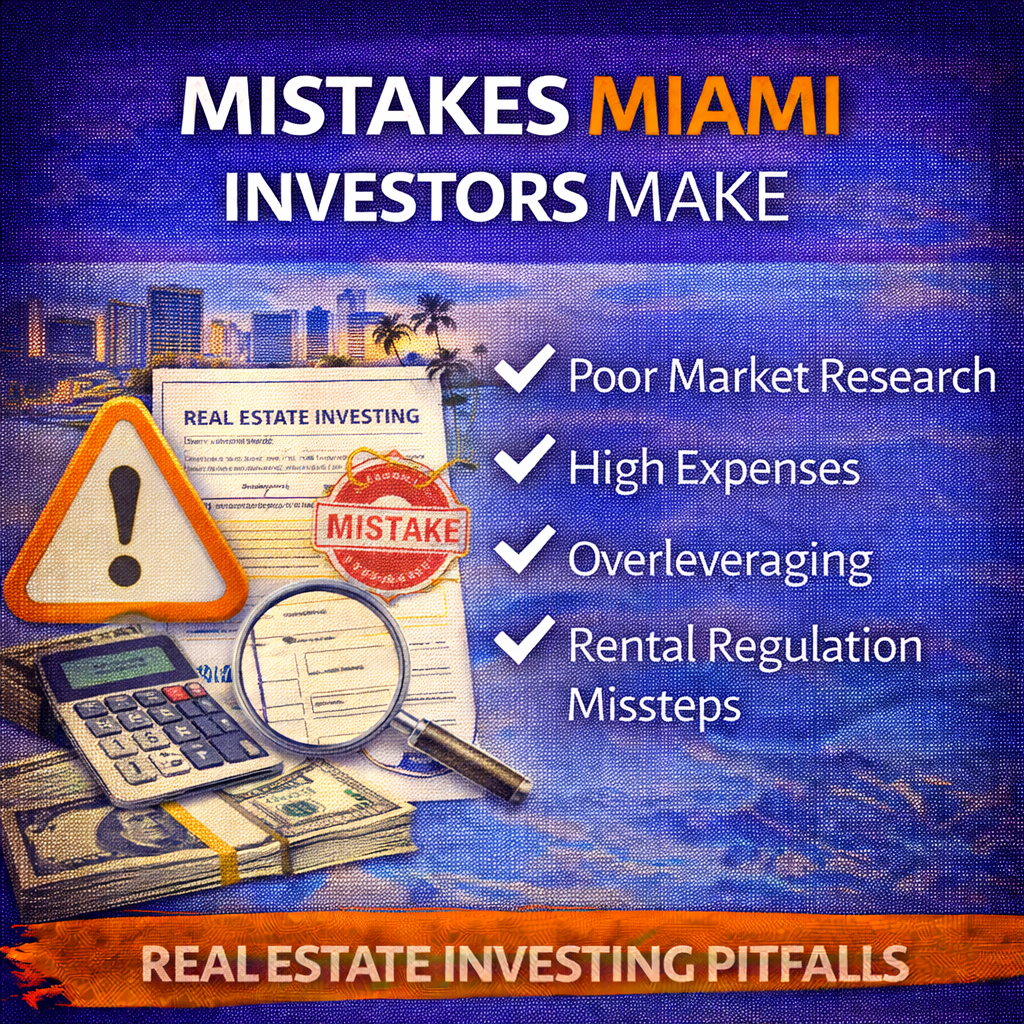
Discover the most common mistakes Miami real estate investors make — from pricing errors and poor due diligence to ignoring market trends. Learn how to avoid these pitfalls and maximize your investment success.
Introduction: Real Estate Investing in Miami
Miami’s real estate market offers incredible opportunities, but even savvy investors can fall into common traps. Whether you’re new to property investing or a seasoned buyer, understanding mistakes Miami investors make helps you make smarter decisions, protect your capital, and build long‑term wealth.
This blog highlights the most frequent investor errors in Miami and provides actionable tips to help you avoid them.
1. Skipping Market Research
One of the biggest mistakes investors make is not thoroughly studying the Miami market before buying. Without research, you may overpay, misjudge rental demand, or overlook neighborhood shifts.
Tip: Always analyze market trends, rent rates, supply/demand, and neighborhood fundamentals before committing.
2. Underestimating Operating Expenses
Focusing only on purchase price can mislead your financial projections. Ignoring expenses such as property taxes, insurance, maintenance, HOA fees, and vacancy costs can quickly erode returns.
Tip: Create a detailed expense budget before evaluating any property.
3. Neglecting CAP Rate and Cash Flow Analysis
Failing to evaluate cap rate or cash flow leaves you guessing on performance. Investors sometimes fixate on price appreciation and ignore rental income potential, which is critical for long‑term ROI.
Tip: Always calculate net operating income, cap rate, and expected monthly cash flow.
4. Overleveraging Without a Safety Margin
Using too much debt can amplify returns — but it also increases risk. A sudden interest rate rise or vacancy period can strain finances if you’ve stretched your borrowing too thin.
Tip: Maintain a conservative debt‑to‑income ratio and include buffer reserves.
5. Ignoring Neighborhood Differences
Not all Miami neighborhoods are equal in rental demand, appreciation potential, or tenant profile. Buyers sometimes choose properties based on price alone rather than local dynamics.
Tip: Compare neighborhood rental trends, employment centers, school zones, and transit access.
6. Failing to Inspect Thoroughly
Waiving or skimping on inspections to speed up a deal can be costly. Repairs for unseen issues — roofing, electrical, HVAC — can exceed your expectations and eat into profitability.
Tip: Budget for professional inspection before finalizing any offer.
7. Misunderstanding Rental Regulations
Miami’s rental laws — especially regarding short‑term rentals — can be tricky. Ignoring zoning, HOA policies, or permitting requirements can lead to fines or forced shutdowns.
Tip: Know local ordinances and restrictions before listing rental units.
8. Poor Property Management Decisions
A property can underperform if not managed properly. Late repairs, poor tenant screening, and miscommunication can lead to vacancies and negative reviews.
Tip: Consider professional management or proven systems for consistent performance.
Conclusion
Avoiding common errors — from poor research to financial missteps — is vital for Miami real estate investment success. By learning from the mistakes others make, you position yourself for stronger returns, smoother transactions, and long‑term profitability in this competitive market.
Frequently Asked Questions
What’s the biggest mistake new investors make?
Failing to perform detailed market research and due diligence.
Does ignoring expenses hurt profitability?
Yes — unanticipated costs like taxes, insurance, and repairs can severely reduce cash flow.
Is leverage risky?
Over‑leveraging increases risk, especially during interest rate changes or economic shifts.
Are inspections essential?
Absolutely — they help uncover hidden issues that could lead to expensive repairs.
Do rental regulations vary by neighborhood?
Yes. Different areas have unique zoning and short‑term rental rules that affect profitability.
Categories
Recent Posts










GET MORE INFORMATION
