
Miami Public Transportation Guide 2026 Transit Tips
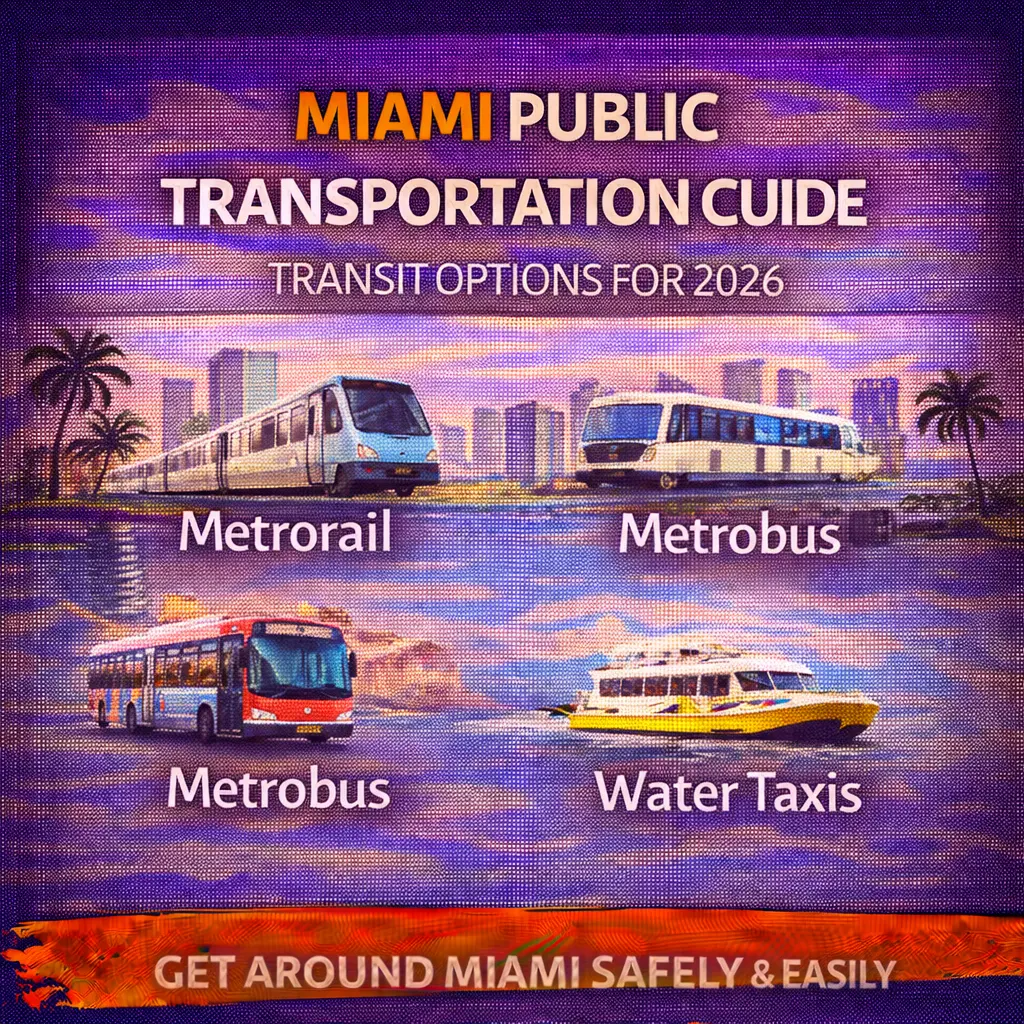
Miami Public Transportation Guide
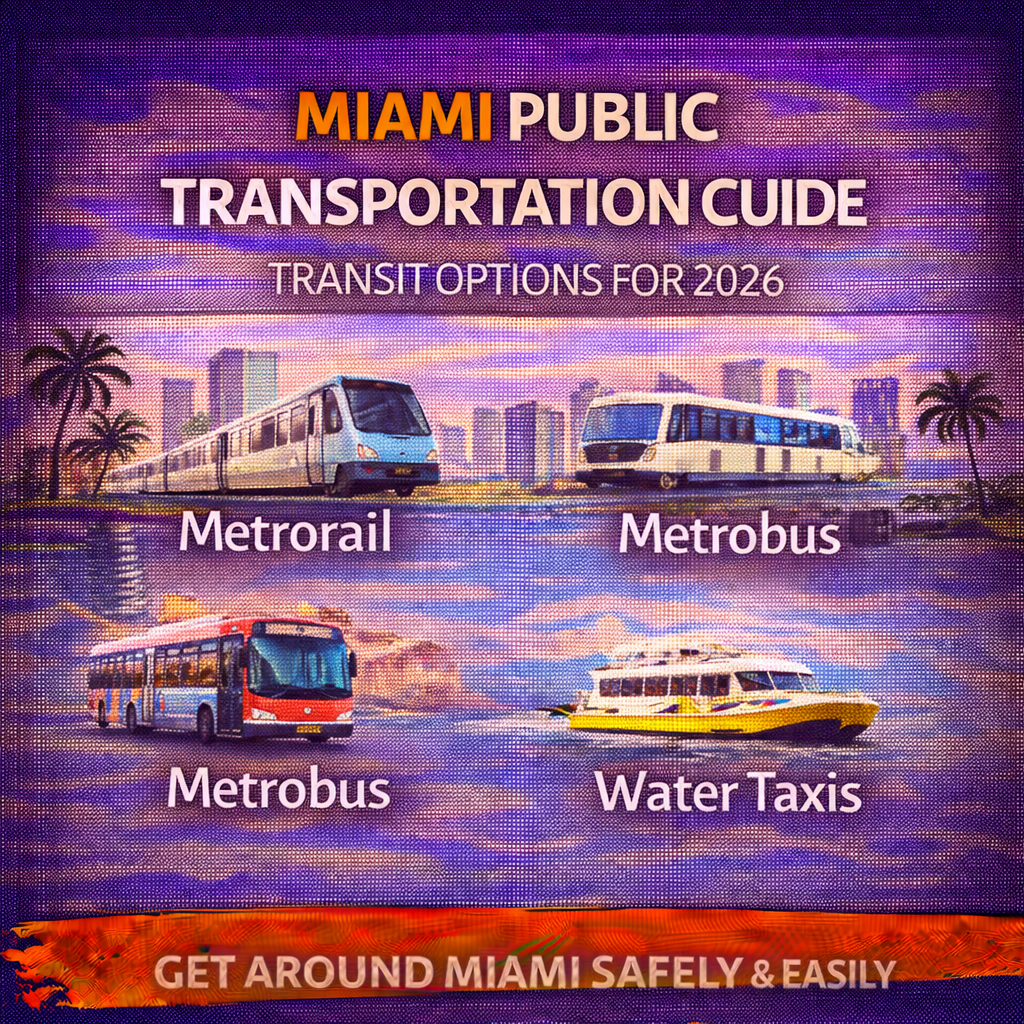
Discover Miami’s public transportation options with this 2026 guide. Learn how to use Metrorail, Metrobus, Metromover, water taxis, and more to navigate the city efficiently without a car.
Introduction: Transit Options in Miami
Miami is a sprawling city — but you don’t need a car to get around. With several public transportation options, including rail, buses, and free circulators, residents and visitors can travel affordably and efficiently.
This guide outlines Miami public transportation networks, how to use them, and tips for getting around with ease.
1. Metrorail — Rapid Transit Across the City
Overview
Metrorail provides elevated rail service across key parts of Miami‑Dade County, connecting major neighborhoods, downtown, and transit hubs.
Benefits
-
Avoids surface traffic
-
Reliable for daily commuting
-
Accessible connections to other transit services
Tips
Use Metrorail for longer trips — especially between residential areas and central job centers.
2. Metrobus — Extensive Bus Network
Overview
Metrobus is Miami’s widespread bus system, reaching areas beyond rail lines with frequent routes.
Benefits
-
Frequent service on major corridors
-
Connects to rail and circulators
-
Affordable fares
Tips
Plan your route ahead and check schedules to maximize efficiency.
3. Metromover — Free Downtown Circulator
Overview
Metromover is a free automated rail that loops through Downtown Miami and Brickell.
Benefits
-
Zero cost for riders
-
Great for short trips and downtown navigation
-
Connects to rail and bus
Tips
Use Metromover to reach offices, restaurants, and transit interchange points.
4. Water Taxis & Ferries — Scenic Commuting Option
In coastal areas, water transport provides a scenic alternative to land transit — especially near Miami Beach, downtown, and waterfront communities.
Benefits
-
Relaxing travel experience
-
Scenic views
-
Works for tourism and commuting
Tips
Check schedules and routes — water transit enhances your transit flexibility.
5. Planning Your Transit Trip
Transit Apps and Schedules
Use transit apps or official maps to plan connections and track real‑time arrivals.
Fare Passes
Fares vary by system — purchasing multi‑ride or monthly passes saves money for frequent riders.
6. Safety & Transit Etiquette
-
Respect seating priority for seniors and people with disabilities
-
Hold onto rail or bus supports
-
Mind personal belongings
-
Be aware of stops and connections
Good etiquette makes transit safe and pleasant.
Conclusion: Navigate Miami With Transit Confidence
From rail and buses to free circulators and scenic water taxis, Miami public transportation offers diverse options to navigate the city efficiently. With a little planning and local insight, you can move around Miami affordably and confidently — even without a car.
Frequently Asked Questions (FAQs)
Is public transportation free in Miami?
Some services like Metromover are free; others require fare payment.
Can I get to the airport by public transit?
Yes — rail and bus services connect to airport transit hubs.
Is transit safe?
Miami’s transit systems are generally safe; stay aware of your surroundings and follow common safety practices.
Categories
Recent Posts










GET MORE INFORMATION
