
Miami Driving, Traffic & Parking Guide Tips for 2026
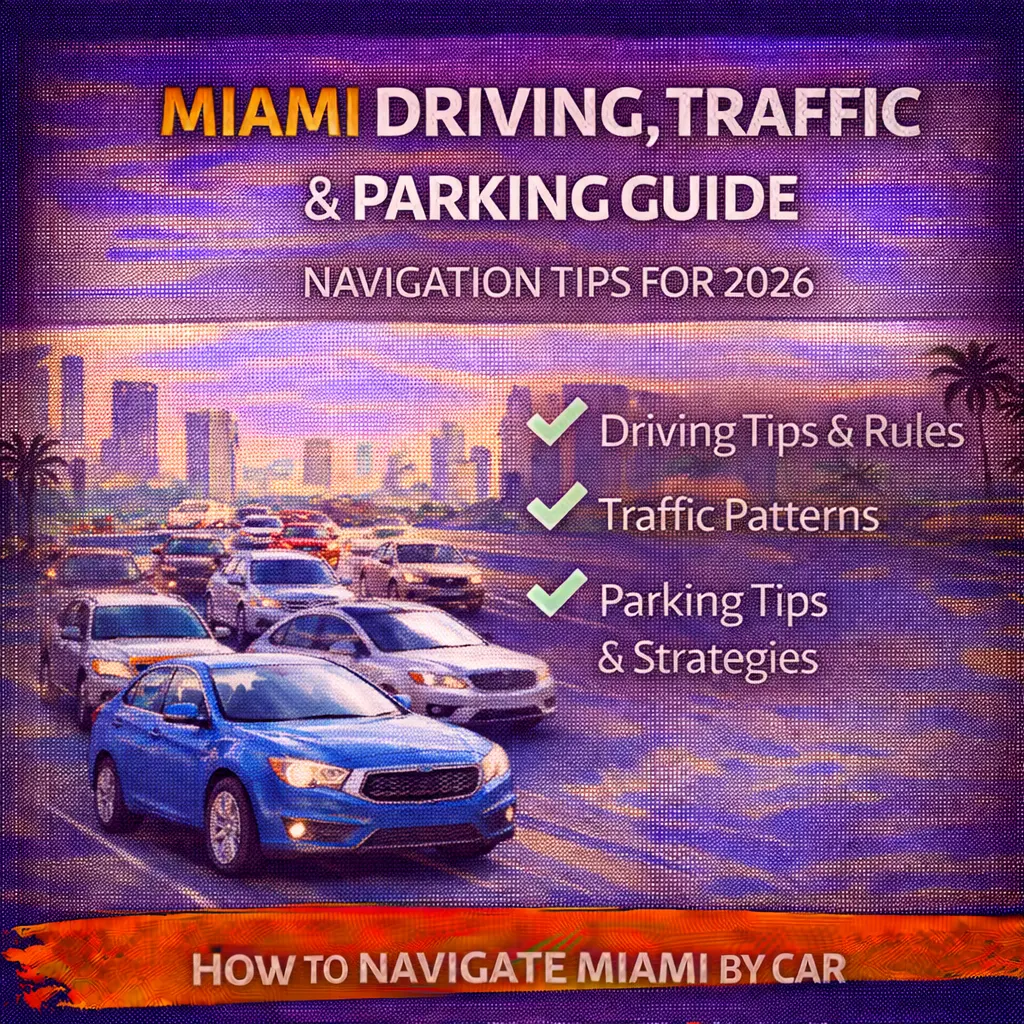
Miami Driving, Traffic & Parking Guide
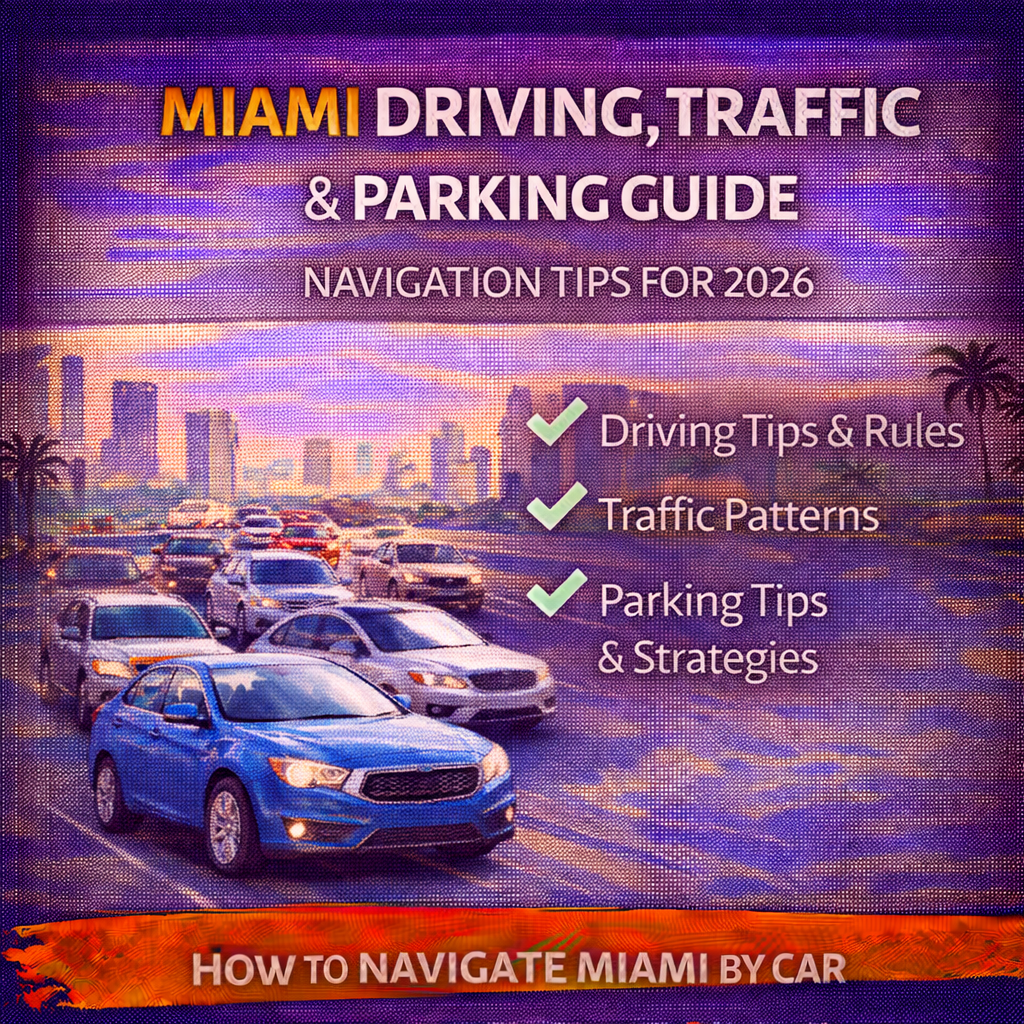
Learn everything you need to navigate driving, traffic, and parking in Miami. This complete 2026 guide covers road rules, rush hour tips, parking strategies, and how to make commuting easier by car.
Introduction: Miami Roads & Car Culture
Miami is known for sunshine, beaches — and traffic. Whether you’re new to the city or planning a move, understanding Miami driving, traffic & parking can save time, reduce stress, and help you enjoy more of what the city offers.
In this guide, we’ll cover the essential aspects of getting around Miami by car: road rules, peak traffic times, parking strategies, and safety tips for a smooth drive.
1. Driving in Miami — Basics & Road Rules
Speed Limits
Speed limits vary depending on the road type:
-
Residential: typically 25–30 mph
-
Urban roadways: 35–45 mph
-
Highways: up to 65 mph
Always follow posted signs — enforcement is strict in many areas.
Right‑of‑Way & Turn Signals
Yield to pedestrians, use turn signals early, and watch for bike lanes to ensure safe driving.
2. Understanding Miami Traffic Patterns
Traffic can be heavy — especially during:
-
Morning commute (7:00–9:00 a.m.)
-
Evening commute (4:30–7:00 p.m.)
-
Weekends near beaches and events
Traffic often intensifies near major routes like I‑95, US‑1, and the Palmetto Expressway.
3. Tips to Beat Rush Hour
Time Your Travel
Leaving slightly earlier or later than peak commute times helps reduce congestion.
Use Navigation Apps
Apps with real‑time traffic alerts help reroute around backups.
Consider Express Lanes
Some highways offer express lanes during peak hours for faster travel.
4. Parking in Miami — What to Expect
Street Parking
Street meters are common downtown and near beaches, with time limits and fees enforced. Always check signs to avoid tickets.
Parking Garages & Lots
Garages offer longer stays with daily or hourly rates — often cheaper than repeatedly paying street meters.
Residential Parking Zones
Some neighborhoods have resident‑only parking; permits may be required.
5. Parking Tips for Busy Areas
-
Plan ahead in downtown, Brickell, and Miami Beach
-
Use public parking garages for longer visits
-
Read signage carefully to avoid fines
-
Consider rideshare or public transit for events
6. Safety Tips for Miami Drivers
-
Watch for pedestrians and cyclists
-
Use your headlights in heavy rain
-
Maintain a safe following distance
-
Be cautious near coastal roads during storms
Safety reduces risk and keeps everyone on the road protected.
Conclusion: Drive Smart in Miami
Understanding Miami driving, traffic & parking equips you to navigate the city with confidence. From timing trips to using garages and planning routes, smart choices mean less stress and more time enjoying everything Miami offers.
Frequently Asked Questions (FAQs)
Is Miami difficult to drive in?
Miami’s traffic can be heavy at peak times, but planning your route and timing helps manage stress.
Do I need a car in Miami?
A car helps greatly outside transit hubs, but central areas have ride‑hail and transit options.
Are parking fines common?
Yes — pay attention to signs and meters to avoid tickets.
What are the worst traffic times?
Rush hours — mornings and evenings — are typically busiest.
Categories
Recent Posts










GET MORE INFORMATION
