Buying vs Pre‑Construction Real Estate: Full Comparison for Smart Homebuyers
Buying vs Preconstruction — Full Comparison
Compare buying pre‑construction vs resale real estate. This full guide outlines pros, cons, costs, timelines, and risks to help you choose the best fit for your investment or home purchase strategy.
Introduction
When you’re in the market for real estate — whether a condo or a home — you often face a fundamental choice: buy a resale (existing) property or go for a pre‑construction unit (a property that’s not built yet). Each path has distinct advantages and trade‑offs.
This guide breaks down the pros and cons of both approaches. It’s designed to help you — as a buyer or investor — make an informed decision based on your budget, timeline, risk tolerance, and long-term goals.
What Is “Pre‑Construction” vs “Buying Existing / Ready Property”
-
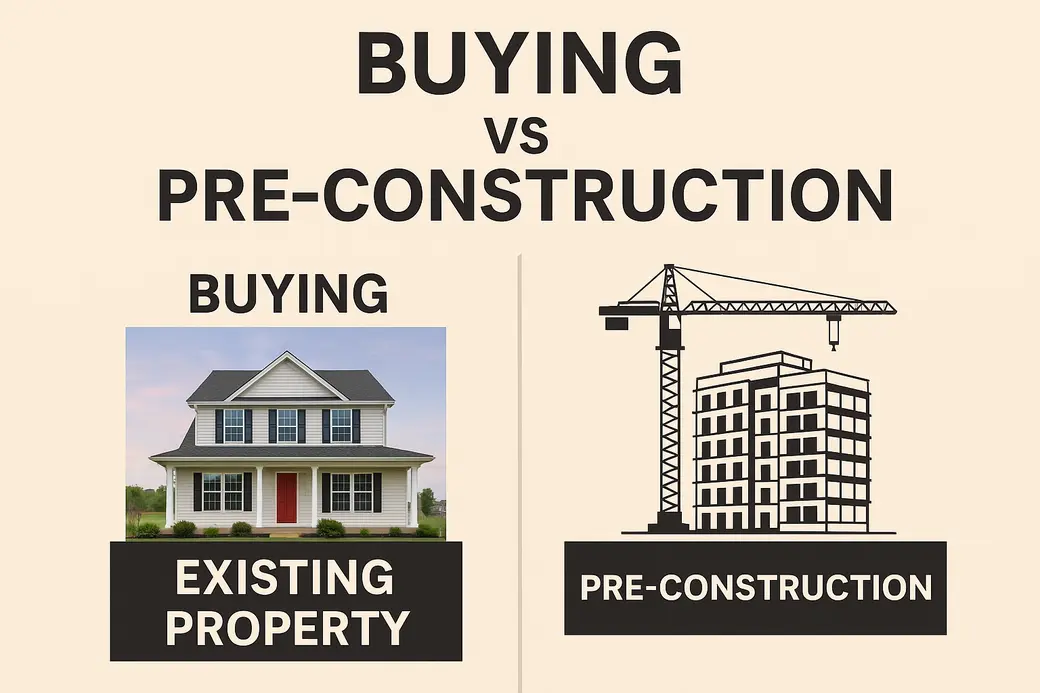
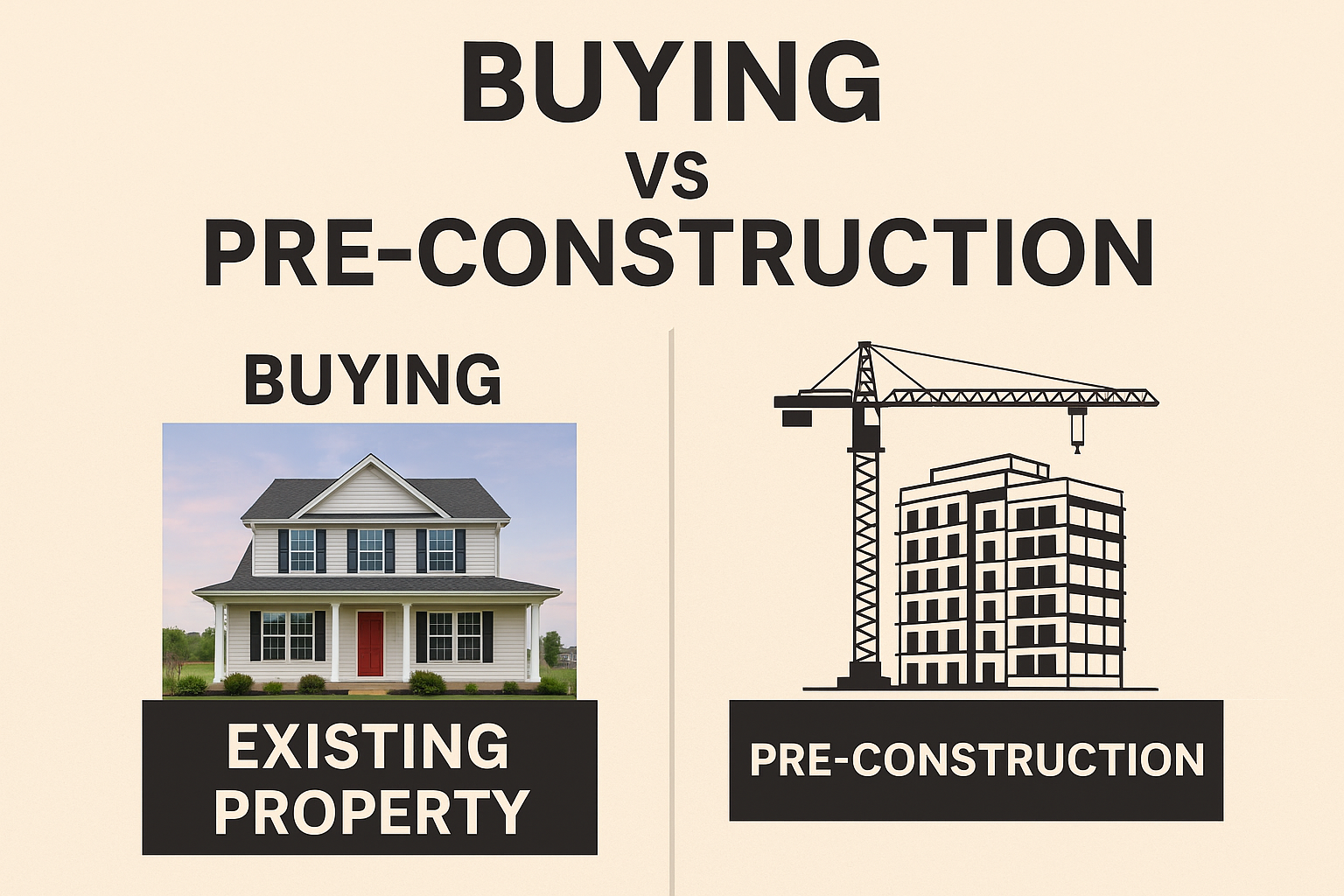
Pre‑Construction refers to purchasing a property (often a condo or new home) before it is built — sometimes just blueprints and renderings. The project may still be years away from completion.
-
Buying Existing/Ready Property involves purchasing a home or condo that’s already built, occupied, or resale — ready for immediate occupancy. Maintenance history, neighborhood context, and actual physical condition are already real and inspectable.
Advantages of Buying Pre‑Construction
Lower Initial Price & Early-Bird Pricing
-
Pre‑construction units are often priced lower than comparable ready units — early buyers may benefit from “first‑list” or early-phase pricing before demand and market appreciation push prices up.
-
Because the building isn’t finished yet, developers may offer incentives or flexible deposit structures (installments over time), which can ease upfront financial burden.
Customization & Modern Standards
-
Early buyers may get options to pick finishes, floorplans, unit location — giving more control over final unit layout and features.
-
New construction typically means modern building materials, updated code compliance (safety, efficiency), newer systems (plumbing, electrical, appliances), and lower likelihood of immediate repairs or maintenance.
Potential for Appreciation Before Completion
-
In a rising market or high‑demand area, property value may increase during the time between contract and completion — offering equity gains even before you move in.
-
For investors, this upside — combined with early pricing — can make pre‑construction units appealing for long‑term gains.
Risks & Drawbacks of Pre‑Construction
Uncertainty: Delays, Changes, and Developer Risk
-
Construction schedules can be delayed by weather, supply‑chain issues, labor shortages — postponing move‑in date.
-
There’s a risk that finishes, floorplans, or project details may change from initial blueprints — what you see on paper may not match final product.
-
If the developer fails to complete the project (financing issues, cancellations, market shifts), buyers may face loss of time, carrying costs, or be forced to rent elsewhere until resolution.
Delayed Move‑In & Holding Costs
-
Since the unit isn’t completed, you may need to continue renting or pay living costs elsewhere until construction ends. These extra costs can add up and diminish early “discount.”
-
Financing terms may change between the time you sign and final closing — interest rates, lending environment, or mortgage availability can shift against you.
Less Visibility & More Risk Upfront
-
You can’t physically inspect structure, build quality, or neighborhood infrastructure — you rely on plans and future promises.
-
Hidden costs: deposits, upgrade costs, possible increases in homeowners’ association (HOA) fees, unexpected expenses when building completes.
Advantages of Buying Existing / Ready Properties
Immediate Occupancy & Known Condition
-
You get to see — and inspect — the actual unit and property: layout, construction quality, surrounding neighborhood, amenities, maintenance history. Helpful to avoid surprises.
-
No waiting — you can move in right away or start renting/selling immediately after purchase.
Established Neighborhood & Infrastructure
-
Surroundings are already developed: streets, utilities, landscaping, local services, amenities — giving clarity on living environment and long‑term value.
-
Easier due diligence: history of HOA issues, property maintenance, potential previous repairs — which helps in evaluating real cost and avoiding risks.
Predictability and Broad Market Data
-
You have comparables — resale prices, rental rates, neighborhood trends — to estimate realistic future value or resale potential.
-
Financing, insurance, and closing processes are more straightforward — no risk of project cancellation or changes in building specs.
Drawbacks & Risks of Buying Existing / Ready Properties
-
Older construction may mean outdated systems, older materials, higher maintenance or repair costs sooner than with a new build.
-
Less ability to customize: floorplan, finishes, upgrades may require extra cost after purchase.
-
Potential for hidden issues (wear and tear, older plumbing/electrical, previous repairs) — need thorough inspections.
-
The price may already reflect market appreciation — so less opportunity for “early entry” gains compared to pre‑construction.
Which Should You Choose? — What Type of Buyer Matches Each Option
| Buyer Type / Objective | Likely Better Option |
|---|---|
| You want a brand‑new home, modern finishes, minimal maintenance & long-term stability | Pre‑construction — if you’re okay with waiting and accepting some risk |
| You want to move in soon, inspect property, avoid uncertainty, or rent/resell quickly | Existing / Ready property — certainty and immediacy matter most |
| You’re investment‑oriented, looking for long-term appreciation & early entry pricing | Pre‑construction — potential value gain before completion |
| You prefer visible history, less risk, and transparency on costs and neighborhood | Existing / Ready property — clarity and predictability weigh heavily |
| You have a lower risk tolerance or limited ability to carry costs during construction | Existing / Ready property — avoids carrying costs and uncertainty |
Tips for Deciding What’s Right for You
-
Assess your timeline — Do you need a home soon, or can you wait? If time is flexible, pre‑construction could work.
-
Check developer reputation — For pre‑construction: research past projects, delivery record, financial stability.
-
Factor in all costs — not just purchase price, but deposits, potential carrying costs, HOA fees, maintenance or upgrade costs.
-
Consider resale/market risk — What if market softens before completion? Have a backup plan.
-
Do thorough inspections (for existing homes) — Hire professionals to evaluate condition, structural integrity, past repairs.
-
Think long‑term vs quick move‑in — Your lifestyle, financial goals, and risk tolerance should guide the decision.
Conclusion
There’s no one-size-fits-all answer to “Buying vs Pre‑Construction.” Both paths offer strong benefits — and significant trade‑offs.
If you value modern amenities, customization, and early‑entry pricing — and can tolerate uncertainty and a longer timeline — pre‑construction can offer great upside.
If you prefer certainty, immediate occupancy, known conditions, and lower risk — buying an existing, ready property is often the safer, simpler choice.
Ultimately, the right choice depends on your personal circumstances, financial stability, timeline, and comfort with risk. Weigh the pros and cons carefully — and choose the route that fits you best.
FAQ — Buying vs Pre‑Construction: What You Should Know
Q: What exactly is a pre‑construction property?
A: It’s a home or condo you purchase before it’s built — often based on architectural plans, renderings, and developer documents, with completion expected months or years later.
Q: Why might pre‑construction cost less than a ready property?
A: Developers often price early units below what comparable finished units will fetch — to incentivize sales and secure financing. That early-bird pricing can mean savings upon purchase.
Q: What are the main risks of buying pre‑construction?
A: Risks include construction delays, changes in project plans/materials, financing or interest rate fluctuations, carrying costs while waiting, and potential for developer or market issues delaying or canceling completion.
Q: What are the advantages of buying an existing or ready property?
A: You get immediate occupancy, the ability to inspect the actual unit and neighborhood, predictable costs, established infrastructure, and less risk compared to a project still under development.
Q: For whom is a pre‑construction purchase a better fit — and for whom is resale better?
A: Pre‑construction may suit buyers comfortable with waiting, seeking modernity or investment upside; resale suits those needing immediacy, low risk, and predictable living conditions.
Categories
Recent Posts







GET MORE INFORMATION
